The NHC team have been at conferences talking about key issues for housing in the North.
NHC Executive Director (Policy & External Relations) Patrick Murray was on the panel for two workshops at the ‘Securing the future of Council Housing’ event in Leeds. Patrick was part of a session called ‘Regeneration that works for everyone’ alongside Leader of Sheffield City Council Councillor Tom Hunt, Director of Policy and Public Affairs at the Housing Forum Anna Clark, and Lara Joyce from the Gleadless Valley Tenants and Residents Association.
Patrick shared details about Renew, our inquiry into housing-led regeneration’s role in delivering growth, tackling the housing crisis, and strengthening communities across the North. He also facilitated discussions with delegates to get insight on key issues including delivery of regeneration in the current policy environment and resident voice and engagement, which will be fed into the inquiry.
Head of Housing Partnerships Satty Rai and Senior Engagement Manager (Devolution and Place Lead) Liam Gregson spoke at the CIH Northern Housing Festival. Satty spoke as part of the keynote session ‘Devolution: Local Powers, Local Solutions’. She used her experience of working with housing partnerships across the North to reflect on the opportunity devolution presents to design housing solutions that meet local needs. Liam was part of a panel on ‘Making Regeneration Work in the North’ sharing the latest news about Renew, and how the inquiry aims to support community-led regeneration which drives economic growth.
https://northern-consortium.org.uk/wp-content/uploads/2026/04/Talking-regeneration-and-devolution-thumbnail.png400495Dan Ellwoodhttps://northern-consortium.org.uk/wp-content/uploads/2026/03/NHC-Home-Logo.pngDan Ellwood2026-03-25 11:25:572026-04-22 11:28:48Talking regeneration and devolution
The Government has now published the Final Local Government Financial Settlement for 2026, confirming how much funding councils in England will receive over the next three years. Following a full consultation process, the settlement provides long-awaited financial certainty for the sector and introduces major changes designed to better reflect local need, changes which significantly benefit many northern authorities. The NHC submitted evidence as part of the consultation, and we are pleased the Government has responded to many of the issues we raised, including increased funding for areas that face higher levels of deprivation, which are disproportionately found in the North.
At the heart of the settlement is a shift towards multiyear budgeting, giving councils clarity after years of one year deals. The Government has confirmed £78 billion in total funding, including £5.6 billion in additional investment for local services between 2026–27 and 2028–29. Councils will see an average Core Spending Power increase of 5.7% in 2026–27, followed by 4.3% and 4.4% in the subsequent years.
A further £740 million has been added since proposals were first consulted on. This includes £440 million for areas most affected by historic cuts, £272 million for homelessness, rough sleeping and domestic abuse, and £39.6 million for mayoral areas, supporting home‑building, transport improvements and local job creation. Mayoral authorities will also benefit from capacity funding to strengthen governance and delivery of devolved responsibilities.
One of the most significant policy decisions is the write-off of 90% of historic SEND deficits, covering debt accumulated up to 2025–26. Councils will only be responsible for 10% of these historic deficits, helping stabilise local finances ahead of SEND centralisation from 2028.
The settlement also confirms a major redistribution of funding towards deprived areas. By 2028–29, the most deprived communities, many of them in the North, will receive 45% more funding per head than the least deprived. This reflects a stronger weighting towards need and supports the long-term sustainability of councils facing deep-rooted socioeconomic challenges.
Importantly, the Government has finalised its grant simplification programme, consolidating 16 fragmented funding streams into four major ring‑fenced grants worth over £21 billion. This shift reduces bureaucracy and moves away from competitive bidding, which has historically disadvantaged councils with fewer resources.
For northern authorities, these changes represent a substantial rebalancing. Higher deprivation weightings, protection from sudden formula shifts, and reduced reliance on council tax and business rates growth mean many councils across the region are now better positioned to plan ahead, rebuild capacity and invest in the services their communities rely on.
While the settlement contains several welcome steps, it does not yet close the widening gap between rising demand and available resource. Councils across the North will continue to face severe and structural financial pressure over the coming years, particularly around social care, children’s services, temporary accommodation and SEND, making long‑term reform, investment and reliable multi‑year funding essential.
https://northern-consortium.org.uk/wp-content/uploads/2026/04/Final-Local-Government-Financial-Settlement-2026-–-What-It-Means-for-Northern-Councils-thumbnail.png400495Dan Ellwoodhttps://northern-consortium.org.uk/wp-content/uploads/2026/03/NHC-Home-Logo.pngDan Ellwood2026-03-25 11:21:042026-04-22 11:22:44Final Local Government Financial Settlement 2026 – What It Means for Northern Councils
The Government’s latest announcements under the Northern Growth Strategy reinforce a major shift towards locally led regeneration, placing substantial decision making power, and significant new investment, into the hands of Mayoral Strategic Authorities across the North.
The strategy frames the North as central to driving national economic growth, noting that stronger northern productivity could add tens of billions annually to the economy. It identifies the Northern Growth Corridor as the backbone of this renewed approach, with Government committing to a long-term partnership with northern leaders to unlock stalled development and accelerate regeneration.
A key element of that commitment is the £1.7 billion allocated directly to Mayors in the largest northern city regions, giving them the resources and tools to overcome barriers that have historically slowed regeneration on urban brownfield sites. This investment is designed to speed up delivery of new homes, support dense city centre development, and unlock major projects in places such as Leeds South Bank, Liverpool Central, Manchester’s Victoria North, Newcastle and Gateshead Quays, and Sheffield City Centre and Innovation Spine. The Government describes this as a decisive effort to give local leaders long-term certainty, attract private investment, and create new housing and job opportunities for the nine million people living across the Northern Growth Corridor.
This direction aligns with the wider approach set out in the Northern Growth Strategy, which emphasises that strategic authorities are best positioned to design and deliver place-specific regeneration. By devolving substantial funding for densification, infrastructure, and urban renewal, it expects local leaders to drive solutions that align with the local land market, economic strengths and community priorities, ensuring regeneration is more effective and more responsive than in the past.
The latest ‘Seven New Towns’ announcement further reinforces a commitment to boosting housing delivery at scale, including two significant proposals within the North: Leeds South Bank, expected to deliver up to 20,000 new homes, and Manchester Victoria North, planned to deliver at least 15,000 homes. One of the eleven original proposals that has since been removed was located in the North (Adlington in Cheshire).
The Government also confirmed the National Housing Bank will launch on 1 April, backed with up to £16 billion of financial capacity to help unlock large scale housing delivery.
Taken together, these developments could mark a significant moment for the North. With substantial new devolved funding, major housing expansions, and a long-term strategic partnership between Government and northern leaders, the building blocks are now in place for a generation of housing-led regeneration that strengthens communities and revitalises brownfield land.
https://northern-consortium.org.uk/wp-content/uploads/2026/04/all-other-blogs-2026-03-25T165441.446.png400495Dan Ellwoodhttps://northern-consortium.org.uk/wp-content/uploads/2026/03/NHC-Home-Logo.pngDan Ellwood2026-03-25 11:14:002026-04-22 11:18:46New northern growth announcements and New Towns
https://northern-consortium.org.uk/wp-content/uploads/2026/04/Renew-–-gathering-evidence-and-pushing-housing-led-regeneration-up-the-agenda-thumbnail.png400495Dan Ellwoodhttps://northern-consortium.org.uk/wp-content/uploads/2026/03/NHC-Home-Logo.pngDan Ellwood2026-03-24 09:51:082026-04-28 14:21:16Renew – gathering evidence and pushing housing-led regeneration up the agenda
On 3 March 2026, the Office for Budget Responsibility (OBR) published new forecasts for the economy and public finances. The Chancellor responded to the forecast in her Spring Statement but as expected, there were no major policy announcements.
The Government resolved to make major tax and spending announcements once a year, at the Budget, which is expected to be held in the autumn. They made a virtue of the ‘stability’ from having only one fiscal event a year and the forecast states that taxes are not changing and neither is spending.
So, despite it being a low-key event, it is still important in showing what effect the last Budget and the Government’s policies have had.
The Chancellor referenced the current global instability, but the OBR forecasts do not take into account any potential impact from a jump in energy prices triggered by the conflict in the Middle East. The OBR states it “could have very significant impacts on the global and UK economies.”
In the Chancellor’s speech she also referenced the importance of “…building growth…in every part of Britain…” and “…creating capacity in our economy through affordable housing…”.
The Chancellor stated that the forecast shows the Government’s plan is the right one, stating “Inflation is down, borrowing is down, living standards are up and the economy is growing.”
Her speech stated that there have been six interest rate cuts since the last general election.
The OBR projects that inflation will fall from 3.4% in 2025 to 2.3% in 2026, and then again to 2% from 2027 onwards. The OBR forecast that the 2% target for the UK inflation rate will be met in ‘late 2026’. The chancellor predicted that people will be more than £1,000 a year better off by the next election, after accounting for inflation.
She cited discounts on energy costs, trade deals, investment in infrastructure and skills, funding for further education and planning reforms as contributing to building growth in the economy.
The housing market – OBR forecast that house price inflation will average just over 2.5% over the rest of the forecast period, broadly in line with growth in average incomes. Net additions to housing stock are expected to fall from an average of 260,000 a year in the early 2020s to a low of 220,000 in 2026-27, as recent muted housing starts feed through. It is then expected that net additions could rise sharply to just over 305,000 by 2030-31, reflecting the impact of planning reforms.
Planning reforms – the forecast has a positive view of the Government’s planning reforms which are expected to boost housing supply, but the reforms’ impact on net additions has yet to meaningfully materialise. Progress will be evaluated again in the Autumn.
Local authority finance – The latest 2024-25 estimate of local authority borrowing is £8 billion higher relative to the March 2025 forecast.
Net borrowing this year could be around 8% higher than 2024-25.
The forecast confirms that the financial positions of many Housing Revenue Accounts (HRAs) have deteriorated sharply.
HRA spending on repairs and maintenance increased by 56% between 2019‑20 and 2025‑26, while rental income increased by only 29% over the same period.
The OBR highlights that many HRAs are “effectively loss‑making” and many councils have been required to sell housing stock or borrow to remain compliant with the legal requirement not to run a long-run deficit on the HRA.
The forecast confirmed that rising demand for statutory services – such as temporary accommodation, asylum accommodation and social care – continues to present a significant risk to local authority finances.
“Together, housing services and social care for both adults and children now make up around 30 per cent of local authority service expenditure in England, compared to around 20 per cent in 2015-16.” OBR March 2026 Economic & Fiscal Outlook
Unlocking investment in urban areas – the Chancellor’s speech referenced the changes to the Green Book, which are expected to unlock investment in urban, rural and coastal communities as well as Pride in Place investment.
Energy Prices – the Chancellor repeated the pledge from last year to cut energy bills by £150 in April.
Welfare Spending – Welfare spending is forecast to rise this year by £18 billion (5.8%) to £333 billion or 10.9% of GDP. The Chancellor stated the Government will achieve the “biggest reduction in child poverty since records began” and cited scrapping the two-child limit.
Unemployment – the unemployment rate is expected to peak at 5.3% this year and then fall gradually to 4.1% by 2030. The Chancellor stated the Government is already taking action, reforming apprenticeships through its youth guarantee with more plans to be set out in the coming weeks.
NHC Reaction
Following the Spending Review in June 2025, which delivered transformative announcements for the social housing sector – including a £39 billion investment into a ten-year Social and Affordable Homes Programme – what the sector needs now is stability and support to deliver. So, the statement which leaves current policy in place to be delivered is welcome, as is the recognition of the importance of place-making and of affordable housing for growth.
Further reading
The Government has recently made several significant housing policy announcements including launching the Decent Homes Standard and the Warm Homes Plan, confirmation of rent convergence, and an update on Minimum Energy Efficiency Standards. For detail about how these announcements impact housing in the North you can read our member briefing.
In addition, bidding opened through Homes England on 24 February for the new £39 billion Social and Affordable Homes Programme. The NHC warmly welcomes the new programme, which will enable members to plan the development of new homes with confidence and deliver the social and affordable homes that our communities desperately need. You can read our update on the bidding process here.
https://northern-consortium.org.uk/wp-content/uploads/2026/03/Spring-Forecast-2026-495-x-400.jpg400495Dan Ellwoodhttps://northern-consortium.org.uk/wp-content/uploads/2026/03/NHC-Home-Logo.pngDan Ellwood2026-03-03 10:26:412026-04-22 10:56:17NHC update on the Spring Forecast 2026 speech
Housing Minister Matthew Pennycook MP has written to the social housing sector announcing that the groundbreaking £39 billion Social and Affordable Homes Programme is now open for bids.
He says in the letter:
“Taken together with the Spending Review package, we have now provided a decade of certainty across grant funding, rents, regulatory standards and clear ambitions for the sector. We are asking providers to take the next step now via bidding for SAHP to translate this certainty into ambitious delivery plans.
“By working together, we can ensure this becomes a reality: investing in existing homes so they are safe, decent and warm, and delivering the biggest increase in social and affordable homes in a generation. I look forward to continuing to work closely with you as we deliver a decade of renewal.”
The NHC warmly welcomes the new programme, which will enable members to plan the development of new homes with confidence and deliver the social and affordable homes that our communities desperately need.
We have worked closely with the Government and have consistently highlighted the importance of a long-term programme which prioritises social rent and includes flexibility on regeneration. We have put forward the case for greater devolution to make sure it meets local priorities and enables housing providers to collaborate on delivery through housing partnerships.
The Government has listened and the new programme – 70 per cent of which will delivered outside of London – picks up on the needs of the North. Some major changes include more funding for social rent – 60 per cent of the total fund – and greater support for regeneration. The grounds by which ‘additionality’ can be demonstrated have been significantly expanded, and the new SAHP can fund a limited number of property acquisitions for regeneration purposes.
The new programme will be aligned to local priorities to a much greater extent. Each Established Mayoral Strategic Authority (EMSAs) will be able to set the strategic direction of the SAHP in their areas and establish programme priorities, including the types of property, tenure and individual sites that should be prioritised. In the North this will apply to Greater Manchester, Liverpool City Region, North East, South Yorkshire and West Yorkshire combined authorities.
Our briefing on the Social and Affordable Homes Programme prospectus can be viewed here. The prospectus provides further detail around how the fund will be delivered now that bidding is open.
https://northern-consortium.org.uk/wp-content/uploads/2026/02/Bidding-open-for.-495-x-400.jpg400495Dan Ellwoodhttps://northern-consortium.org.uk/wp-content/uploads/2026/03/NHC-Home-Logo.pngDan Ellwood2026-02-26 10:38:432026-04-22 10:57:23Bidding open for £39 billion Social and Affordable Homes Programme
Decency in social housing has barely improved since the pandemic, with around 430,000 homes failing the Decent Homes Standard (DHS), according to the Housing, Communities and Local Government Select Committee report published last Monday. Despite news reporting on the headline of stalled progress, the report itself acknowledges higher decency in social housing than private rented housing and outlines the systemic challenges for providers. The first challenge listed is maintaining some of the oldest stock in Europe. NHC estimates that across the North, where homes are disproportionately older and colder, there are 100,000 social homes that are nearing the end of their serviceable life.
While some homes can be refurbished, the committee raises concerns that meeting new regulatory requirements will limit sector investment in new homes, and that targets for new social housing will be missed. Warning that “a lot of social housing has reached, or is shortly approaching, the end of its intended lifespan”, the report flags the risk that disposals may increase. The Committee calls for an assessment of the cumulative impact of new regulatory requirements on the supply of social homes over the next decade, and also calls for a single housing quality framework, consolidating all social housing regulatory requirements, with a single pooled fund that can be used more flexibly.
NHC has shaped the committee’s findings through the Lessons from Last Time report on the last Decent Homes Programme, influencing the recommendations for a more holistic programme, housing partnerships and procurement consortia. The report also draws on the Fabian Society’s research ‘Home Comforts’ – developed with support from the NHC – which makes the case for a decade of dedicated estate regeneration funding.
The report makes recommendations on the implementation of DHS, MEES and Awaab’s Law. A recent NHC member briefing summarises the latest UK Government policy announcements on these regulatory changes last month. Over the past few years, the NHC has worked with the Ministry for Housing, Communities and Local Government as part of its Sounding Board, ensuring members views were heard at each stage. We also worked with members and submitted a response to the formal consultation on the updated Decent Homes Standard.
Some of the Select Committee report’s issues relate to NHC’s ongoing RENEW inquiry, which is currently calling for evidence to help communicate to political decision-makers the challenges of funding housing-led regeneration, as well as the benefits to local communities.
https://northern-consortium.org.uk/wp-content/uploads/2026/04/What-the-New-Green-Book-Changes-Mean-for-the-North-thumbnail.png400495Dan Ellwoodhttps://northern-consortium.org.uk/wp-content/uploads/2026/03/NHC-Home-Logo.pngDan Ellwood2026-02-19 12:29:052026-04-22 12:30:33Parliamentary committee warns that ageing social housing stock risks achieving targets for new supply, as progress on decent homes stalls
The Northern Housing Consortium (NHC) – the membership body for the social housing sector across the North of England – has been awarded the Better Health at Work Award in the Continuing Excellence category, as the organisation marks its 51st year.
NHC staff at the Better Health at Work Awards
In addition to the Continuing Excellence Award, the NHC were delighted to be presented with a special recognition award for our innovation. Judges highlighted a high-level of engagement in the NHC’s free health checks to all colleagues. They also praised our ‘Get it Done’ financial wellbeing campaign which gave colleagues the opportunity to complete some life admin in work time.
The Continuing Excellence award reflects the NHC’s focus on being one of the very best places to work in the region. The NHC, encompassing NHC Procurement, first achieved the Bronze award in 2022, swiftly followed by Silver in 2023 and Gold in 2024.
The award recognises employers that take a proactive, evidence-based approach to health and wellbeing at work, embedding good practice into everyday workplace culture. The NHC is now part of a select group of organisations that have achieved Continuing Excellence for their commitment to employee wellbeing.
Tracy Harrison, Chief Executive of the NHC, said:
“This award is something we’re incredibly proud of because it reflects our focus on people. We want the NHC to be a place where people feel supported, valued and able to be their best at work. Achieving Continuing Excellence shows that our focus on wellbeing isn’t a one-off or a tick-box exercise, but a core part of who we are, making the NHC a great place to work and attracting and retaining talented people.”
Wellbeing at the NHC is shaped by colleagues themselves through a staff-led wellbeing group, which has grown into a central part of the organisation. The wellbeing group works collaboratively, helping to identify workplace wellbeing priorities and forming strategies to achieve these.
A special acknowledgement also goes to our Head of HR and Wellbeing Kay Wiseman, whose leadership has been instrumental in driving progress across both the NHC and NHC Procurement to create a culture that values health and wellbeing across every level in the organisation.
Northern Housing Consortium colleagues take part in a Walk & Talk initiative to mark Time to Talk day, organised by the staff wellbeing group
She said:
“From mental health and financial wellbeing to fitness, nutrition and first aid, we’ve focused on creating practical, inclusive initiatives that genuinely support everyday life.
“When people feel better, they’re happier, more productive, and the whole organisation benefits. The results speak for themselves, with a third of our staff with us for over ten years, and our headcount growing by over 30% in the last three years alone.”
Over the past year, the NHC’s internal wellbeing campaigns have included group activities, expert speakers, health checks, budgeting support and hands-on opportunities to build first-aid skills.
All colleagues also have access to mental health first aiders, an employee assistance programme and a dedicated wellbeing portal offering gym membership discounts, information on health services and 24-hour mental health support. A corporate flu jab scheme was also introduced in 2025 to further support staff health and wellbeing.
Better Health at Work assessors praised the NHC’s leadership and culture, noting a “comprehensive and proactive approach to workforce health, safety and wellbeing”. The NHC is now working towards achieving Maintaining Excellence in 2026, continuing to build on its wellbeing programmes as part of its wider people strategy.
Tracy Harrison added:
“We’re ambitious about the future, not just in the work we do across the northern housing sector, but in the kind of employer we want to be. Recognition like this helps us tell that story and reinforces our commitment to creating a supportive, inclusive and rewarding place to work.”
Those interested in career opportunities at the NHC should visit the LinkedIn page for upcoming vacancies.
The government announced a series of major housing policy announcements, ending significant uncertainty around future regulatory requirements and rental income. These announcements include confirmation about how rent convergence will be implemented throughout the 2026 – 2036 rent policy period and the government’s response to major consultations on a new Decent Homes Standard and Minimum Energy Efficiency Standards.
On rent convergence, the government confirmed that convergence would be implemented through a phased approach, but would landlords would not be able to implement convergence from April 2026. Instead, convergence will be permitted for the financial year beginning from April 2027 at £1 per week, before rising to £2 per week from 2028 and for the rest of the ten year rent period.
Convergence will also only be permitted to formula rent level, rather than the additional 5% (or 10% for supported housing) that providers are able to charge in some circumstances.
Decent Homes Standard
The government also published their response to the previous consultation on a new Decent Homes Standard, with some major changes to the proposals after sector feedback.
Following consultation, the government are not progressing with previous proposals to mandate floor coverings as part of the Decent Homes Standard, or extending the purview of the Standard to include elements of the wider public realm beyond the home.
The below table shows a summary of the requirements for each Criterion within the new Decent Homes Standard, which will apply to all rented homes, in both the private and social rented sectors, from 2035.
Criterion
Requirements
Criterion A – A home must be free of the most dangerous hazards
• Properties must be free of ‘Category 1’ hazards as assessed under the Housing Health and Safety Rating System (HHSRS).
Criterion B – A home must be in a reasonable state of repair
Homes will fail this criterion if:• One or more key building components is not in a reasonable state of repair, or• • Two or more other building components are not in a reasonable state of repair.
Criterion C – A home must provide core facilities and services
Flats must provide at least 3 of the following:• A kitchen with adequate space and layout• An appropriately located bathroom and WC• Adequate external noise insulation• Adequate size and layout of common entrance areas for blocks of flatsHouses must provide at least 2 of the following:• A kitchen with adequate space and layout• An appropriately located bathroom and WC• Adequate external noise insulationAll homes must also be equipped with:• Child-resistant window restrictors (overrideable by an adult) on all windows that present a fall risk for children.
Criterion D – A home must provide thermal comfort
• Homes must provide a reasonable degree of thermal comfort, including meeting Minimum Energy Efficiency Standards.
Criterion E – A home should be free of damp and mould
• Homes will be non-decent if a landlord has not remedied damp and mould.
Minimum Energy Efficiency Standards
Finally, new Minimum Energy Efficiency Standards for the social rented sector, which will form a core part of Criterion E of the Decent Homes Standard, were also published.
The government had originally proposed that properties would need to align with two of three metrics, covering a building’s fabric, heating system and smart readiness, by 2030. This has been reduced in scope following consultation, so properties will now need to be compliant with one of the three metrics by 2030, and with two metrics by 2039. Providers will be able to apply for a “time-limited spend exemption” of ten years if they have incurred £10,000 of spend on an individual property’s energy efficiency upgrades and it still cannot be made compliant with the Standards.
There will also be an extended transition arrangement introduced, whereby all properties that achieve EPC C on the current system by 2030, will be considered compliant with MEES until their energy performance certificate needs renewing.
You can read the full details of the outcome of the MEES consultation here.
This comes on the back of the government publishing the Warm Homes Plan, laying out £15 billion worth of public investment to improve the energy efficiency of 5 million homes between now and 2030.
NHC members will receive a full detailed briefing on all of these announcements in the coming days. Welcoming the announcements, the Northern Housing Consortium’s Chief Executive, Tracy Harrison, said:
“Today’s package of announcements will give Northern social housing providers long term financial and regulatory certainty and is warmly welcomed by the NHC. It will help our members to deliver warm and safe homes across the North.
“The Government has listened to and responded to feedback from NHC members on the new Decent Homes Standard and Minimum Energy Efficiency Standards. The new standards take on board consultation findings, and, as a result, are more practical to implement and will improve the quality of homes across the North.
“The NHC and other sector bodies called for the introduction of rent convergence to unlock greater investment in new and existing homes. The rate the Government has put forward balances the need to invest in homes while ensuring rents remain affordable to residents. This, alongside today’s announcement that low interest loans will be available to northern housing associations, and the transformational £39bn ten-year Social and Affordable Homes Programme, will enable our members to build many more homes in the North.
“We look forward to continuing to work closely with the Government to support NHC members to deliver the homes Northern communities need.”
Check out our member briefing that brings together the key takeaways from these announcements, highlighting what they mean for housing providers and professionals across the North of England.
https://northern-consortium.org.uk/wp-content/uploads/2026/04/Government-publishes-new-details-on-rent-convergence-Decent-Homes-Standard-Minimum-Energy-Efficiency-Standards-–-thumbnail.png400495Dan Ellwoodhttps://northern-consortium.org.uk/wp-content/uploads/2026/03/NHC-Home-Logo.pngDan Ellwood2026-01-29 12:31:572026-04-22 12:39:19Government publishes new details on rent convergence, Decent Homes Standard, Minimum Energy Efficiency Standards – read our member briefing
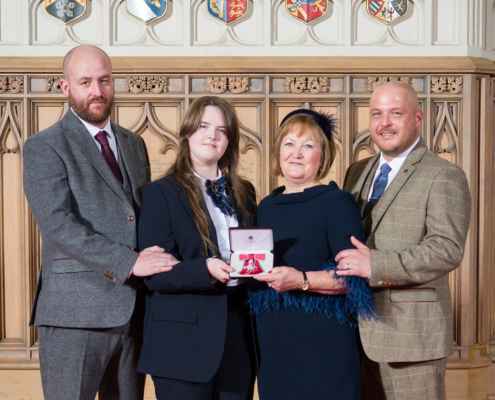
Northern Housing Consortium (NHC) Executive Assistant Lynda Redshaw was presented with an MBE for services to social housing in the North of England by her Royal Highness The Princess Royal at Windsor Castle.
Lynda, has worked at the NHC for 34 years, continuing beyond retirement age and demonstrating a courageous commitment to her role despite difficult personal circumstances. She has mentored colleagues throughout her career and has helped the NHC grow from a team of three to an organisation with over 40 staff. Lynda is a prolific fundraiser, generating over £60,000 for good causes while working at the NHC.
Lynda Redshaw MBE
Lynda Redshaw MBE, Executive Assistant at the Northern Housing Consortium said:
“When I found out I’d been honoured in the Kings Birthday’s Honours List in June last year, I was completely shocked and surprised. Receiving my MBE at Windsor Castle was a very special day which will be a treasured memory for me and my family. It was an honour to meet the Princess Royal, and all the staff were fantastic, really putting me and the other honours recipients at ease.
“It is very gratifying to be honoured and recognised for the dedicated hard work I have done for the NHC over the last 34 years. My family, friends and work colleagues are so proud of me, and to be honest I feel a little bit special and proud of myself too.”
Lynda attended the ceremony with her two sons and granddaughter.
Northern Housing Consortium Chief Executive Tracy Harrison said:
“I can’t think of anyone more deserving of this recognition than Lynda. Everyone at the NHC is over the moon for her. She is a well-loved colleague and someone who has made a tremendous contribution to the NHC and the social housing sector in the North. This was reflected in the number of supportive letters her honours nomination received. She is a fountain of knowledge and has for many years been the backbone of the NHC.”
Lynda was instrumental in setting up the NHC’s Unlocking Success Bursary which offers £500 grants to people living in social housing to help them access training or employment opportunities, or to start their own business. For fifteen years she organised the Hitex Summit, which connected social housing providers and IT suppliers, helping the sector in the North go digital. She is well known amongst NHC members for her impeccable organisational skills and helpful attitude.
Lynda’s first job was at Lumley Castle working in the office and taking banquet bookings. She went on to the English Industrial Estates Partnership as a secretary (now Homes England) followed by working at Chester Le Street District Council where she was a shorthand typist and secretary for the Chief Technical Officer. She then took a short career break to look after her young children and joined the Northern Housing Consortium in 1991.
https://northern-consortium.org.uk/wp-content/uploads/2026/04/MBE-for-our-longest-serving-colleague-thumbnail.png400495Dan Ellwoodhttps://northern-consortium.org.uk/wp-content/uploads/2026/03/NHC-Home-Logo.pngDan Ellwood2026-01-28 12:42:572026-04-22 12:46:10MBE for our longest serving colleague