Northern growth strategy: next steps

THE NORTHERN HOUSING CONSORTIUM RESPONSED TO THE INVITATION FOR VIEWS from Government to help shape the next phase of the Northern Growth Strategy, ahead of a further update in the autumn.

Our submission to Government draws heavily on our Renew inquiry into housing-led regeneration for northern growth, supported by Homes for the North and Muse.

The Northern Growth Strategy: Next Steps sets out how the Government will drive growth in the North of England, working alongside local leaders. It recognises housing-led growth as a driver of productivity in northern towns and cities and commits to deeper devolution that empowers local leaders to shape and deliver growth.

Northern Housing Consortium Chief Executive Tracy Harrison said: “The strategy focuses on the Northern Growth Corridor and densification of housing in the region’s major cities, promising to deliver 127,000 new homes. The recommendations are welcome, but there is a wider opportunity to make sure no one and nowhere is left behind. Our recent Renew report found that housing-led regeneration could unlock at least 500,000 high-quality homes across the North of England, creating thriving communities while supporting growth and productivity.

“Housing providers and other stakeholders told us viability is a widespread structural barrier across the North. Lower land values and high remediation costs for brownfield sites make many schemes unviable without Government support. In addition, lower rents but similar costs for northern social housing providers means investment in refurbishing and replacing homes often comes at the cost of building new homes.

“We are calling on the Government to provide the right support, including long-term devolved regeneration funding, and local capacity building, to seize the opportunity offered by housing-led regeneration. This will help achieve the housing ambitions set out in the Northern Growth strategy and support smaller towns and places in the North to thrive.  Our policy recommendations are about ensuring that regeneration is viable and achievable across the North, which has diverse needs and challenges. We are hopeful that the increased devolution recommended in the strategy will help target investment where it is needed most, including those smaller places.”

The Renew Report places the quality of homes and places at the heart of regeneration, viewing it as essential for health, wellbeing, and economic growth. We believe that with targeted investment and policy support, housing-led regeneration could unlock at least 500,000 high-quality homes across the North of England, creating thriving communities while supporting wider growth and productivity.


Power Closer to Place: the new Prime Minister and devolution 

The new Prime Minister has made one thing abundantly clear: England’s future will not be shaped solely from Westminster. 

Andy Burnham entered office with a long-held belief that decisions are almost always better when they are made by people who know their places and understand their communities. As former Mayor of Greater Manchester, he has seen first-hand what can be achieved when local leaders are trusted with the powers and resources to shape their own futures. Now, as Prime Minister, he is seeking to put that principle at the heart of Government. 

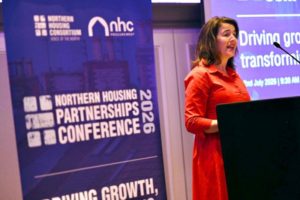
In her recent speech at the Northern Housing Partnerships conference Tracy Harrison, Chief Executive, NHC, reflected on the vital role Housing Partnerships will play in the devolution landscape under the new Prime Minister, saying: 

“Housing partnerships are devolution in action… 

“They help us move faster, align investment, solve problems collectively and make sure housing has a stronger voice in wider conversations about growth, health, skills, transport, net zero and regeneration. 

“And this is exactly the sort of collaboration Andy Burnham was talking about in his speech… setting out his vision for the country.” 

Central to the Prime Minister’s vision is a commitment to a significant programme of devolution. The Prime Minister has established No.10 North in Manchester, creating a permanent centre of Government outside London and signalling a fundamental shift in where decisions are made. Designed to bring ministers, mayors, and local leaders together around a shared mission of growth – No.10 North reflects a belief that solutions are stronger when they are shaped with places. 

For those working across housing, regeneration, and place-making the direction of travel will feel familiar. The Government’s approach recognises that growth does not happen in silos. Housing, transport, skills, infrastructure, health, and regeneration are intrinsically linked – and the most successful places are those able to align investment and delivery around a shared vision. In many ways, this reflects the same partnership-based approach that has long underpinned successful work across the North. 

Perhaps the most significant policy announcement so far has been the decision to give English mayors a share of locally generated tax revenues. Under plans announced by the Prime Minister, mayoral authorities will retain a proportion of income tax revenues for the first time. And from next spring, mayors will begin retaining a greater share of business rates. The principle is simple: when places create jobs, attract investment, and grow their economies, they should keep more of the rewards. Rather than relying on decisions made in Whitehall, local leaders will have greater freedom and flexibility to invest in local priorities and respond to local challenges. 

This represents a significant shift in the relationship between central and local government. By giving places greater control over their resources, the Government aims to support longer-term planning, stronger accountability, and more effective delivery. For mayoral authorities, it creates new opportunities to invest in the infrastructure, housing, skills, and regeneration programmes needed to drive sustainable growth. 

The direction of travel is significant for York and North Yorkshire Combined Authority, which has recently been recognised as the first rural mayoral area in England to become an Established Strategic Authority. This important milestone reflects the strength of local governance and delivery arrangements, while positioning the region to access a deeper level of devolution in the years ahead. Crucially, it places York and North Yorkshire on the pathway towards an Integrated Settlement, providing greater flexibility to align funding across housing, transport, economic development, and skills. As Government continues to devolve powers and funding from Westminster, the region is well placed to take advantage of the opportunities this new model presents. 

Alongside these reforms, the Prime Minister has been clear that devolution should become the default rather than the exception. The challenge for Whitehall, in his view, is no longer to justify why powers should be devolved, but why they should remain at the centre. This marks a profound change in thinking, one that recognises the value of local leadership and the importance of empowering communities to shape their own futures. 

For places across the North, the opportunities are significant. Greater powers, more flexible funding and stronger local leadership create the conditions for a genuinely place-based approach to growth. Housing will have a critical role to play in that agenda, not simply as an outcome of growth but as one of its key enablers, supporting regeneration, improving health outcomes, attracting investment, and creating thriving communities. 

The Prime Minister’s vision is rooted in a simple but powerful idea: the people who understand a place best should have the greatest influence over its future. Whether the challenge is building new homes, revitalising town centres, improving transport connectivity, or creating opportunities for future generations. Power should sit closer to the communities it serves, and the future of devolution will be built by those who know their places best. 

Renew update

Over the past few months, the NHC has been continuing to press the case for regeneration in the North with the Government and building the political momentum around Renew – our inquiry into housing-led regeneration for northern growth – supported by Homes for the North and Muse. 

Our most recent work on Renew includes: 

  • sharing our Renew report with northern MPs, ministers, Mayors, and other political stakeholders – including Andy Burnham MP and No.10 housing advisors 
  • meeting with Tom Riordan, Northern Growth Envoy at HM Treasury. We’ve also met HM Treasury policy officials to discuss our Renew findings and understand their priorities.  
  • holding a policy roundtable with NHC members and Emma Payne, Director of Social Housing, MHCLG, and Selvin Brown, Director Net Zero Buildings,DESNZ, to explore the findings of our Renew report and discuss the real-world challenges and opportunities. 
  • discussed Renew at an MHCLG Social Housing Directorate away day, as part of the panel ‘Social Housing: Looking Ahead’. 
  • continuing to work with Lord Best OBE DL and Andrew Cooper MP, as Chairs of our Renew Inquiry and Westminster Group respectively. Lord Best OBE DL wrote an article for The House magazine (the magazine for parliamentarians) and Andrew Cooper MP wrote an article for Red Brick. 
  • Andrew Cooper also raised Renew in parliament during a Westminster Hall debate on estate regeneration. He highlighted our Inquiry and said that without significant intervention 100,000 social homes in the North could be lost over the coming decade. He also spoke about the far-reaching benefits of housing-led regeneration, and the need for regeneration to be delivered with communities. The overall tone of the debate was positive, with the need for good resident engagement a strong focus. It’s great to see how the rhetoric on regeneration is changing. The debate and a comment from the NHC was covered in Inside Housing.   
  • sharing our Renew findings and recommendations with key Labour Party figures at the Fabian Society’s Housing Summit in London, where Patrick Murray, Executive Director (Policy and External Relations) was on a panel with Martin McCluskey MP, now Minister for Local Energy and Jobs and Anna Dixon, MP for Shipley, along with social housing activist and author Kwajo Tweneboa.     
  • hosting a one-dayGreat North theatre on Renew at Housing 26– with key contributions from Lord Best OBE DL, who set out how the continued focus on new homes was crowding out regeneration, but was optimistic the tide was turning. Martin Hilditch, Editor, Inside Housing, a whole host of brilliant NHC members, along with Sheffield resident, Lara Joyce, added to the packed agenda! The Great North Theatre showcased some of the fantastic work going on in the North. The message was clear – even more can be done with further support for housing-led regeneration and continued devolution.  
  • continuing to work with Inside Housing as part of their Spotlight on Regeneration series. Recent regeneration articles can be found on their website. We also worked with Red Brick on a series of articles on regeneration.   

The NHC team has also been developing resources to help you activate engagement with Renew with your local politicians. We will share these with members in the coming weeks and months to help build momentum to make this change happen. If you would like to take action now – get in touch with Saskia and we’ll work with you or your team, email – Saskia.neibig@northern-consortium.org.uk  

We will also discuss how you can help Renew as part of our joint Communications and Policy Network in September – you can view further details about the event and book your place at My NHC.  

Announcing the recipients of the 2026 Unlocking Success Bursary 


We are delighted to announce the recipients of Northern Housing Consortium’s Unlocking Success Bursary. Each winner has received £500 to support their education, training or community ambitions, supporting social housing residents across the North to achieve their goals. 

Congratulations to all of this year’s winners, who we will be celebrating at this December’s Unlocking Success Bursary Lunch. For more information on joining us at the Bursary Lunch, please visit MyNHC. 

Livin 

  • Allan Todd: Selected to help him return to employment as a recovery driver, rebuilding his confidence and sense of purpose while making a positive difference to others. 
  • Billy Clifton: Supported to establish an affordable community shop offering good-quality second-hand goods, helping local people on low incomes while reducing waste. 
  • Ahmad Mohmd Dib Elhasan: Awarded funding for the licences needed to become a taxi driver, helping him achieve financial independence and support his family. 

Believe 

  • Domingo Ibanez Navarro: Supported with a high-performance laptop and learning materials for his BSc in Cybersecurity and Digital Forensics. 

Connect 

  • Lexi Thompson Brighty: Selected to pursue her ambition of becoming airline cabin crew, with funding towards her Level 2 Diploma, safety training and passport. 

Gentoo 

  • Emma Naisby: Awarded funding for a Level 3 dog walking and boarding qualification, supporting both her business ambitions and personal wellbeing. 

Halton Housing 

  • Laura Mason: Supported to train as a Reiki practitioner and integrate the practice into her counselling work, helping clients with their wellbeing and healing. 

Kingston upon Hull City Council 

  • Craig Smith: Selected for his commitment to fellow residents. He will provide shared digital equipment in his supported housing complex and renew food-hygiene qualifications to help run community events. 

Karbon 

  • Jolene Metcalf: Supported to complete a Higher Level Teaching Assistant course and develop her career helping children with special educational needs. 
  • Jemma Marie Smith: Awarded funding for a Level 3 Certificate in Property Agency, enabling her to build on her accounting qualification and pursue a career in property. 

Leeds City Council 

  • Lydia Hirst: Selected to undertake specialist bridal and prom hairstyling training, helping her develop her talents after overcoming significant challenges in mainstream education. 

Newcastle City Council 

  • Ava Phillipa Mallloy: Supported with an iPad for her criminology, psychology and law studies, reducing the impact of hypermobility and fibromyalgia on her ability to take notes. 
  • Gamilah Faraj: Awarded funding for a sewing machine and course, with plans to earn an income and teach sewing to women with limited English. 
  • Omid Noorzai: Supported to study AI programming and purchase a laptop, strengthening his employability and helping him work towards establishing his own consultancy after rebuilding his life in Newcastle. 

Places for People 

  • Paul Daley: Selected to retrain as a gym instructor, gaining the qualifications now required to return to a career he loves and help others achieve their goals. 

St Leger 

  • Beth Quinton: Supported to complete a Level 3 Forest School qualification and help children with additional needs build confidence through nature. 

Sheffield City Council 

  • Victoria Ashton: Awarded funding for a laptop and travel costs while completing a Level 2 Teaching Assistant course focused on supporting children with autism. 
  • Alexander Shreeve: Supported to obtain a higher-level HGV licence, opening access to better-paid employment and greater financial stability. 
  • Lyndsey Fronczyk: Selected to support her paramedic training, including a laptop for home study, as she works towards providing high-quality care in her community. 
  • Florentina Luca: Awarded funding for a laptop to complete the English and science qualifications required for nursing, easing financial pressures as a single parent. 
  • Lisa McCann: Supported to undertake a floristry course and pursue her ambition of opening a shop specialising in funeral arrangements. 
  • Luwam Gebreab: Awarded funding for a laptop to complete online coursework and research for a nursing degree. 
  • Maria Pearson-Sacker: Supported with a laptop and books for university-access studies in maths and English, with the goal of progressing to a nursing degree. 
  • Deryn Jade West: Selected for support with university fees and materials while completing a bachelor’s degree in Mental Health Nursing. 
  • Wahada Majid: Awarded funding towards registration fees for psychotherapy training, enabling continued support for people experiencing grief, trauma, anxiety and depression. 
  • Gertrude Omaboe: Supported with travel, learning materials and childcare while studying for an MSc in Occupational Therapy. 
  • Abdul Rahman Mohammed Fadil Ahmed: Awarded funding for a laptop, books and equipment for an Open University Diploma of Higher Education, building on his previous experience as a primary-school teacher. 
  • Lauren Kerry: Supported with a laptop and living costs while training as an adult nurse and completing placements, alongside caring for her child. 
  • Samantha Jacques: Awarded funding for a laptop and course fees while completing a Level 2 Teaching Assistant qualification. 
  • Omobowale Ogunrinola: Supported with a laptop, learning materials and childcare costs while studying to become a social worker. 
  • Rachel Susan Stringer: Awarded funding for a laptop and End of Life Care course fees, helping her pursue a career supporting people in the care sector. 
  • Leanne Lawson: Supported with the cost of an Access to Higher Education course in Social Work, easing financial pressure while she cares for her two children. 
  • Rikki James Latham: Selected to restart construction training through night classes, with support for travel and tools as he works towards becoming a bricklayer. 

Social and Affordable Homes Programme Statement August 2026

Welcoming the announcement of funding being released from the Social and Affordable Homes Programme, Patrick Murray, Executive Director (Policy and External Relations) at the Northern Housing Consortium said:

 “It’s great news for communities in the North almost £10bn of funding from the Social and Affordable Homes programme has now been announced outside London. Our members stand ready to build much-needed new homes, and we share the Government’s ambition for everyone to have a secure, affordable home which gives them the foundation for a good life. Allocating this funding now is the most important step to building more social housing in the next few years.

We also welcome increased collaboration between Homes England and Strategic Mayoral Authorities, with a bigger role for Mayors in the future, and the North’s housing partnerships will also be central to this. In the North, these relationships already have strong foundations and are proving to be a successful delivery model. This will mean we will be able to better respond to different housing challenges in different places and ultimately get more of the right homes built in the right places.

“However, the programme has been oversubscribed, which demonstrates the appetite for development and unfortunately means disappointment for some of our members who could build more much needed social homes with more funding. We also understand that the flexibility which allows the Social and Affordable Home Programme to be used for estate regeneration could be further utilised to unlock more delivery. There is a gap in funding for regeneration. Our Renew inquiry has found regeneration acts as a catalyst for new development and unlocks capacity to build more social housing, particularly in the North. Further investment in housing-led regeneration through a £500m per year, 10-year devolved regeneration fund is needed.

Nonetheless this is a good day for all those in need of an affordable home. This announcement will mean more social housing and housing associations and councils can finally get on with building.”

Tracy Harrison reflects on 20 years (and counting) of impact at the Northern Housing Consortium 

After two decades with the Northern Housing Consortium, Chief Executive Tracy Harrison reflects on what 20 years at the organisation has taught her, and her plans to take the NHC even further. 

Looking back over her time with the NHC, Tracy points first to the financial stability the organisation has achieved. A deliberate strategy to grow and diversify NHC Procurement has helped reduce reliance on other sources of income, protect the organisation’s surplus, and create new opportunities to support members. 

She is equally proud of the influence the NHC now has nationally. “Undoubtedly we are the voice of the North in housing,” Tracy says. “Increasingly, we have a seat at the table where we are the only regional housing voice.” 

A transformed sector 

Tracy joined the NHC in 2006, when the housing sector was part-way through the original Decent Homes programme. Providers were investing heavily in improving existing stock, while government attention was also focusing on the need for more homes. 

Nearly 20 years later, she sees clear parallels as the sector looks ahead to implementing a new Decent Homes Standard and renewed investment in existing homes. But the wider context has changed significantly following the global financial crash, austerity measures and the pandemic, while political change and fragmentation have created additional complexity for housing providers and for organisations seeking to influence policy. 

At the same time, tenant voice and customer focus have moved much closer to the centre of the sector’s thinking. For Tracy, whose early career was in fast-moving consumer goods, that focus on the customer has always been fundamental. 

Leadership shaped by people, purpose and enterprise 

Tracy describes her leadership approach as being shaped less by one defining moment and more by the environments she has worked in throughout her life. Growing up in a business family gave her a strong work ethic, a focus on adding value, and an entrepreneurial outlook. 

Early in her career, she also saw what a great team can achieve when people work hard, support each other and enjoy what they do. That belief in people has remained central to her leadership at the NHC. 

Making a difference in the North 

Although Tracy says she “completely fell into housing”, it is the people, purpose and impact of the sector that have kept her here. 

“What motivates me to stay in housing and at the NHC is working with really good people, having a fantastic working environment and a shared purpose – making a difference to people’s lives every day,” she says.

Initiatives with lasting impact 

Among the initiatives Tracy believes will have a lasting impact is the Unlocking Success Bursary. Launched in 2019, the Bursary, funded through the Northern Housing Consortium Charitable Trust, awards grants to tenants amongst NHC’s membership to support future employment. 

“The difference our Unlocking Success Bursary makes to people’s lives is clear every year at the celebration and fundraising event, and we can’t wait to see how that makes a greater and greater impact in the years to come,” says Tracy. 

Another major turning point came when Tracy became Chief Executive. Following the NHC’s first Member Perceptions Survey, the organisation made a conscious decision to become more targeted in our work. 

“That sharper focus has helped us to cement our influence where it can add most value for our members and gain traction with local and national government.
“More recently, the Renew inquiry into housing-led regeneration has built on years of work making the case that housing in the North faces unique challenges and requires solutions shaped by northern places. Renew has received evidence from organisations responsible for around one million of the North’s 1.4 million social homes and has set out how regeneration can unlock at least 500,000 good quality homes across the North.” 

Growing the NHC’s influence 

Tracy also highlights the long-term impact of investing in NHC Procurement. “An ‘invest to grow’ approach has enabled us to expand the team, strengthen processes and transform our procurement offer. Today, procurement is the major source of the NHC’s income and supports the wider policy, engagement and member offer.” 

She points too to the NHC’s Spending Review submission, which brought together a strong evidence base from work across the previous years. Tracy believes the submission played a major part in securing long-term investment for social and affordable homes, including the £39bn Affordable Homes Programme announced by Government. 

“The size and longevity of that funding programme is probably beyond what any of us imagined we would achieve,” she says. 

“Housing Partnerships have also become an increasingly important part of the NHC’s work, particularly as devolution gathers pace. Partnerships are proving themselves to be highly effective delivery bodies and will continue to be central to our work with members across the North.” 

Creating the conditions for people to thrive 

Asked what she hopes colleagues and partners would say has been her biggest contribution, Tracy returns to culture. 

“For us as an organisation, creating an environment where people can flourish and achieve their full potential – everything stems from that,” she says. 

Her approach has been to surround herself with talented people, give them space and opportunity, and create an organisation where people want to stay, contribute and do meaningful work. She says it is because of the NHC’s people that the organisation “punches well above its weight”. 

“That same commitment extends beyond us as an organisation,” she says through initiatives such as the Unlocking Success Bursary and the GEM programme, both of which support people to progress and develop careers in housing. 
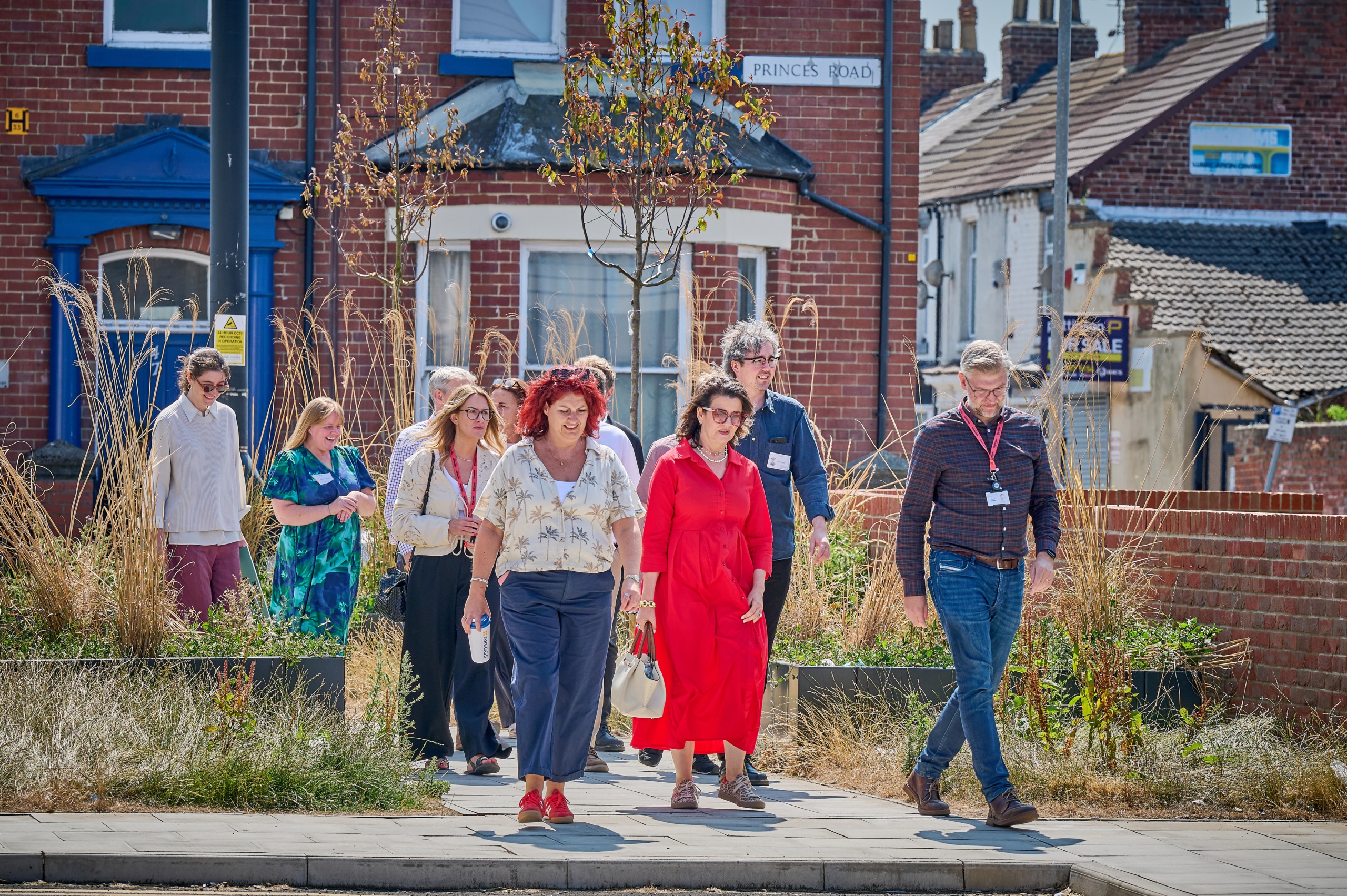
Looking ahead 

For Tracy, the most enduring legacy of her time at the NHC so far will be the culture, financial sustainability, resilience, and of course the organisation’s growing influence on behalf of the North. 

“Financial resilience gives any organisation the option to do more, while culture is what enables talented people to deliver their best work,” she says. “Both have been essential to the NHC’s ability to build credibility, influence Government and support members.” 

As devolution continues to move up the national agenda, Tracy says the NHC’s focus now is on making the most of the moment. The organisation has helped create and support the architecture for delivery, including through Housing Partnerships, and will continue to champion the role of housing in northern growth. 

“My ambition hasn’t diminished at all,” Tracy says. “My drive for the organisation is still there, and the sky is the limit for us at the NHC. It’s so clear that we are making a real difference, and it still feels like there’s so much more we can do.” 

She also wants to keep building the NHC’s culture as work patterns continue to change – positioning the organisation both as a place where people can build long-term careers and as a talent incubator for the wider sector. 

Tracy also pays tribute to the NHC Board, describing them as extremely supportive and committed, and central to what the organisation can achieve. 

“The more we do great work, the more great people want to work with us – whether as colleagues, partners or members,” she says. 

“Let’s Keep Leading”: Housing Partnerships Come Together to Shape the North’s Future 

View imageIn the week where Andy Burnham MP made his first major leadership speech at the People’s History Museum in Manchester, housing partnerships from across the North came together for the NHC’s first Housing Partnerships Northern Conference to share learning and demonstrate how partnership working is delivering at scale. 

On Thursday 2nd July, NHC Chief Executive, Tracy Harrison opened the conference, setting out the progress made by partnerships, highlighting that they are now an established part of the housing system. She emphasised the importance of the role of housing partnerships in delivering regeneration and devolution across their regions. 

In her key remarks she highlighted how housing partnerships have involved from an innovative concept to a vital mechanism to help us move faster, align investment, solve problems collectively and ensure housing has a stronger voice in wider discussions around growth, health, skills, transport, net zero and regeneration. Tracy also emphasised the North has led the way in developing housing partnerships, noting that housing partnerships are increasingly being viewed as an example of effective collaboration by organisations and regions outside the North. 

She reflected: “At the Northern Housing Consortium, we’re proud champions of devolution because decisions are almost always better when they’re made by people who know their places, understand their communities and have real skin in the game…  

Housing Partnerships are a practical way of getting things done.  

View image

They help us move faster, align investment, solve problems collectively and make sure housing has a stronger voice in wider conversations about growth, health, skills, transport, net zero and regeneration.” (full speech can be found here) 

Devolution was a consistent focus throughout the conference. Speakers highlighted the importance of a housing-led, place-based approach, aligning housing with infrastructure, transport and wider priorities to maximise funding. Strong governance and integrated settlements were identified as key to making this work in practice.  

Homes England reinforced the role of housing partnerships in delivery, highlighting their importance in building pipelines of new homes and supporting strategic place partnerships.  

Sessions also explored the role of local authorities within partnerships, including the challenges of balancing responsibilities as landlords and place-shapers. Partnerships were identified as a mechanism for coordinating activity across areas and enabling a more strategic approach to place.  

Workshops focused on delivery. In the North East, partners are already seeing the benefits of joint procurement, including cost savings, more efficient use of funding and the creation of local employment opportunities. Delegates identified leadership alignment, shared values and executive buy-in as critical to successful collaboration.  

Attendees also reflected on how to strengthen influence locally. Aligning with mayoral priorities and demonstrating delivery were seen as essential to building trust, with partnerships using their scale and collective voice to engage effectively.  

Skills and workforce pressures were a key issue, with significant vacancies across the construction sector. Partnerships are working with colleges and training providers to develop targeted pathways into employment, including new training academies and collaboration with further education.  

A key theme that came out strongly throughout the day was the importance of housing-led-regeneration and the work of the Renew inquiry as a strong example of what housing partnerships can achieve collectively. Referencing the inquiry in her key note speech, Tracy highlighted how the inquiry received evidence and insights from organisations responsible for around 1 million of the North’s 1.4 million social homes and more than 160 individual regeneration schemes and sites. The strength of this evidence coming from the willingness of housing partnerships, members and partners across the North to contribute their knowledge, expertise and experience. View image

The Renew report found that housing-led regeneration can unlock at least 500,000 good quality homes across the North of England, and is based on the evidence of  

The conference also highlighted the wider role of housing partnerships, including supporting health, preventing homelessness and working with communities. Examples included integrating housing into health systems, scaling up homelessness prevention approaches and responding to local challenges through long-term community engagement.  

Overall, the Housing Partnerships Northern Conference demonstrated the growing role of partnerships in coordinating delivery, influencing policy and responding collectively to shared challenges across the North. 

Tracy challenged delegates to continue building on the progress made so far:  

“The North has led the way so far. My challenge to all of us is simple. Let’s keep leading.” 

Decent Homes Network: Join us this September

The June meeting of the Decent Homes Network welcomed Lucy Hancock, Head of Social Housing Redress at the Ministry of Housing, Communities and Local Government, who attended to gather feedback from housing providers on the implementation of Phase 1 of Awaab’s Law.

Members reported that implementation has generally gone well, with many organisations already working to high standards. However, challenges remain, particularly around gaining access to properties to inspect and address hazards within required timescales.

The discussion also highlighted the need for clearer guidance on damp and mould hazards, with members raising concerns that inconsistent definitions can lead to disproportionate responses and increased pressure on repairs services.

Attendees further discussed the overlap between Awaab’s Law, HHSRS and the emerging Decent Homes Standard, noting the importance of clearer alignment across regulatory requirements. The session provided a valuable opportunity for members to share frontline experiences and help inform future policy development.

The next session of the Decent Homes Network will be led by NHC Procurement and will be taking place on the 15th September. You can find out more about this here.

NHC hosts DESNZ member roundtable 

The NHC recently brought together members for a roundtable with officials from the Department for Energy Security and Net Zero (DESNZ) to discuss the delivery of the Government’s Warm Homes agenda and the transition to Net Zero. The discussion focused on ensuring organisations are prepared for the rollout of the Warm Homes Plan and the particular challenges associated with older, less energy-efficient housing stock, especially across the North. 

DESNZ provided an update on a number of significant programmes currently under development. Officials highlighted how energy security concerns and global geopolitical pressures are accelerating the UK’s shift towards electrification and reducing reliance on fossil fuels in homes. Members also heard about plans for a new £100 million solar and battery storage programme, progress on incorporating Wave 3 funding into integrated settlements, and strong demand for existing Local Grant funding, with delivery targets exceeded last year. DESNZ confirmed that further engagement with the housing sector will take place as work continues on future support for low-income households. 

A major theme of the roundtable was the need for greater certainty around funding and policy. Housing providers emphasised the importance of receiving early clarity on future funding programmes to support long-term planning, collaboration and investment decisions. There were also calls for multi-year funding settlements, consistent guidance and greater certainty around the future direction of energy efficiency and decarbonisation policy. DESNZ recognised these concerns and acknowledged the value of long-term certainty in enabling successful delivery. 

The discussion also explored several delivery challenges. Members highlighted the difficulties created by short funding cycles, administrative burdens and reporting requirements that can affect project delivery. There was broad agreement on the need to reduce bureaucracy and develop more flexible approaches that allows organisations to respond effectively to local circumstances. 

Participants also discussed financing models – including low-interest loans, energy-as-a-service approaches and other innovative mechanisms designed to support the transition to low-carbon homes while protecting residents from additional costs. DESNZ indicated that it is actively exploring a range of these options and welcomed continued engagement from the sector. 

Devolution and place-based delivery featured strongly in the conversation. While integrated settlements were viewed positively, participants discussed the differing priorities and funding requirements across Combined Authorities, which can create complexity. Participants also stressed the importance of alignment of national policy between DESNZ and MHCLG. 

Supply chain capacity and technology deployment were also discussed. Members highlighted challenges around workforce capacity, ensuring opportunities for SMEs, and overcoming barriers associated with technologies such as battery storage and heat pumps in some retrofit settings. 

The roundtable concluded with a shared recognition that housing providers will continue to play a leading role in delivering warmer, more energy-efficient and lower-carbon homes. DESNZ committed to maintaining ongoing dialogue with NHC members as key programmes and policies continue to develop.

Tenant GEM Programme Bursary Opportunity Returns for 2027  

In partnership with the GEM Programme we are pleased to announce that, following the success of recent years, we will once again offer a fully funded place on the award-winning GEM Programme in 2027.

This opportunity – worth over £5,500 and funded through the GEM Programme bursary – is open to tenant employees within NHC member organisations, providing a unique chance to develop personal leadership skills, confidence and networks within the housing sector.


A transformative experience

 Last year’s bursary recipient, Lucy Downer (MSV Housing), has described the programme as a hugely impactful experience:

“Meeting so many passionate, inspiring and like-minded people has become one of the most meaningful parts of the experience. The programme has reignited my passion for housing, building my confidence, challenging my thinking, and encouraging me to approach opportunities with a more open and proactive mindset.

Coming from a diverse background and living in social housing myself, this experience feels even more meaningful. It highlights the importance of lived experience in shaping inclusive communities and services. Applying is one of the best decisions I’ve made.”


About the GEM Programme

 The GEM Programme is a year-long personal leadership and development programme delivered across the UK and Ireland. It is designed to support emerging housing professionals to develop:

  • Sector knowledge and insight
  • Personal leadership and confidence
  • Strong professional networks
  • A CIH Level 4 qualification, increasingly important across the sector

At the NHC, we’ve seen first-hand the impact of GEM, with many participants progressing strongly in their careers.


What’s included

 The successful applicant will benefit from:

  • Six in-person “GEM Shacks” – immersive, themed learning events held across the UK and Ireland
  • Study support and resources for the CIH Level 4 qualification
  • Mentoring and coaching support
  • Access to a high-value network of peers, experts and sector leaders

The 2027 programme begins with its first sessions on 25–26 January 2027 in Leeds.


Eligibility and costs

 To be eligible, applicants must:

  • Be a tenant (social housing, council, shared ownership or RTB)
  • Be currently employed by a council or housing association
  • Live in the property (they do not need to be the named tenant)

Please note:
The host organisation will be responsible for travel, accommodation, meals and associated costs.


Key dates

  • 30th September 2026 – Deadline to express interest
  • November 2026 – Applicants notified of outcome
  • 4th December 2026 – Bursary Celebration Lunch (for shortlisted candidates)

Shortlisted applicants who are not selected may still benefit, as organisations of candidates placed in the top 10 will receive a 25% programme discount (excluding expenses).


How to apply

To put forward a candidate, please contact Ross Price: ross.price@centreforpartnership.co.uk

The full 2027 GEM Programme prospectus is available for further information.

We encourage members to take advantage of this valuable opportunity to support and develop talented tenant employees and future leaders in the housing sector.