Housing Minister welcomes Renew research at Westminster event  

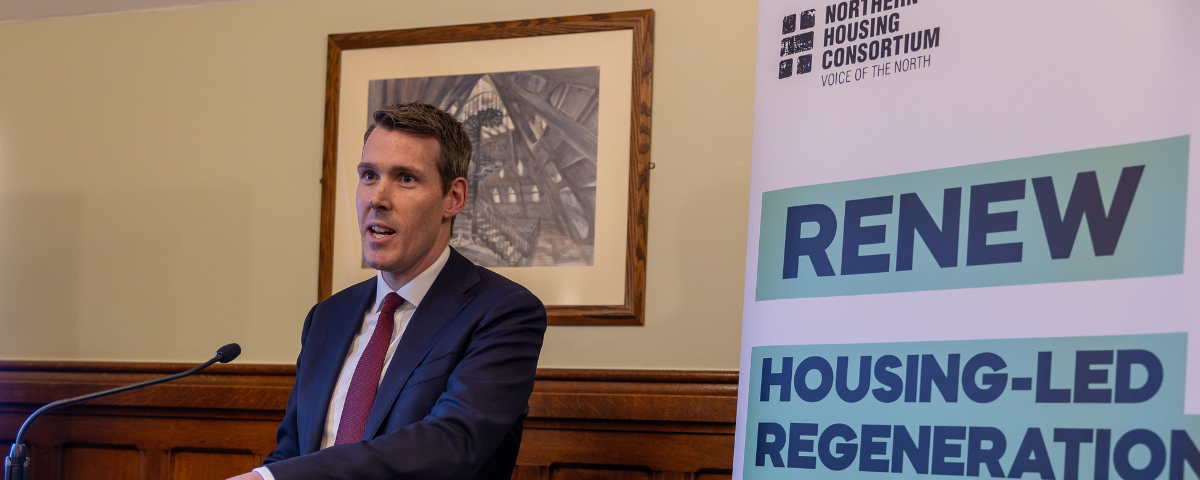
Housing Minister Matthew Pennycook MP spoke at the launch of the first Renew research report ‘Unlocking over 500,000 good quality homes in the North’.   

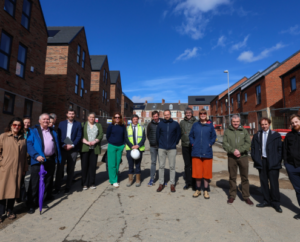
The event took place in Westminster, and there was a strong turnout of parliamentarians. The Minister welcomed the new report and reflected on the importance of regeneration. He listened to all the speakers and engaged with guests.

Other speakers included Andrew Cooper MP, who hosted the event and explained why good quality housing is so important. Lord Best OBE DL shared why he is chairing Renew and the importance of addressing poor quality homes alongside increasing new supply.   

Our Chief Executive Tracy Harrison gave an overview of the report, highlighting the opportunity to boost supply of new homes in the North, kickstart economic growth and create thriving communities though housing led regeneration. She highlighted that housing providers in the North faced significant barriers, and only with support to overcome viability issues can the true potential of housing-led regeneration be unlocked.  

Chief Executive of MSV housing and NHC Chair, Charlie Norman, gave a member’s perspective and drawing on her experience in Greater Manchester, highlighted how devolution can support regeneration.  Secretary of the Gleadless Valley Residents Association Lara Joyce shared how regeneration can bring a sense of hope to residents, and why it’s important to deliver on promises to keep local people’s trust. She also talked about the importance of involving residents in shaping plans for their community.  

What was clear from the event – and the report – is that housing-led regeneration is more than bricks and mortar and balance sheets. It is change for communities that need it most, and in Lara’s words, it’s about it feeling safe to feel hope.


Unlocking over 500,000 good quality homes in the North

Housing-led regeneration can unlock at least 500,000 good quality homes across the North of England according to a new report published by our Renew inquiry today.

This includes reviving struggling high streets with over 100,000, new homes in town and city centres, building 320,000 homes on brownfield land and renewing or replacing 100,000 social homes in need of regeneration.

The report, which launched in parliament today, is based on evidence from organisations responsible for around 1 million of the North’s 1.4 million social homes. Insights from more than 160 regeneration schemes have informed the findings. Renew is supported by Homes for the North and placemakers Muse.

The research comes at a pivotal moment for the social housing sector, with significant new Government investment and growing devolution powers enabling northern leaders to shape housing, transport, and skills policy more effectively. However, regeneration in the North faces significant barriers including lower land values and high remediation costs for brownfield sites, making many schemes unviable without Government support. In addition, lower rents but similar costs for northern social housing providers means investment in refurbishing and replacing homes often comes at the cost of building new homes.

The Renew inquiry is calling for greater Government support to boost supply of new homes in the North, kickstart economic growth and create thriving communities.

Headline policy recommendations from the report ‘Unlocking over 500,000 good quality homes in the North’ include:

Long-term devolved regeneration funding

  • A £500m per year, 10-year Place Based Regeneration Fund for Mayoral Strategic Authorities.
  • Increase the term of the National Housing Delivery Fund to 10 years to unlock more sites with higher upfront costs.

A national framework to enable local delivery:

  • A Minister for Regeneration to drive cross-government coordination.

Build local capacity and expertise:

  • Create a National Centre for Regeneration, based in the North, to rebuild capacity across the sector and lead research and innovation.

Build trust with residents:

  • Agree a set of standards and rights with residents involved in regeneration.


Northern Housing Consortium Chief Executive Tracy Harrison said:

“Now is the time to put the final pieces of the jigsaw in place to tackle the housing crisis, build thriving places and healthier homes, and deliver northern growth.

“This research shows that housing-led regeneration is essential to increase the supply of new homes, attract private investment, and boost economic growth in the North. It helps create great places to live, improves housing quality and residents’ health and wellbeing, generates jobs and skills opportunities, and promotes sustainability by providing greener, more energy-efficient homes that lower household bills.

“If the Government is serious about delivering 1.5m homes and making sure no-one and nowhere is left behind it must act now to further support housing-led regeneration in the North. Replacing old and cold homes people no longer want to live in will give forgotten areas a new lease of life, transforming communities and encouraging development.”


Chair of Homes for North and Group Chief Executive of Karbon Homes Paul Fiddaman said:

“Homes for the North strongly supports the Renew inquiry. Regeneration is central to delivering more and better homes, improving existing communities and unlocking the North’s economic potential.

“Our members have already mapped a major pipeline of regeneration opportunities across the North, including projects in some of the country’s most deprived communities, but too many schemes remain constrained by inflexible funding rules, viability gaps and fragmented delivery systems.

“Policy reform and long-term partnership with government at all levels to address these issues could enable housing associations to help turn a major regeneration pipeline into lasting social and economic value.”


Managing Director of Muse Phil Mayall said:

“We’re pleased to have supported this important new report published by the Northern Housing Consortium’s Renew inquiry today.

“The role of regeneration in not only tackling the housing crisis across the North but also supporting the socio-economic growth of communities is clear. Yet, for many in the sector, the ability to deliver high-quality homes for people to live as part of thriving, well-designed communities are held back by the barrier of viability.

“Across many towns and cities, brownfield sites are at the heart of regeneration ambitions, bringing disused and underutilised sites back into productive use. However, the financial viability gap remains a major obstacle.

“Without the right policy framework and investment, many otherwise deliverable projects will struggle to come forward. The recommendations in this report are an important step towards creating the certainty, funding and local capacity needed to unlock regeneration at scale.

“At Muse, we know from our work across the North that long-term partnership is critical to making complex regeneration happen. If we are serious about delivering more homes and creating successful places, we need to give local leaders and delivery partners the tools to turn ambition into reality.”

Over the summer, Renew will host a series of tours to regeneration sites across the North to learn lessons from successfully completed sites, projects in-progress and schemes unable to get off the ground despite clear regeneration needs. Further research and engagement will include looking at the role of tenant engagement in shaping and delivering successful regeneration projects.

You can access the full report and executive summary here.

NHC at UKREiiF – housing at the centre of northern growth  

The NHC took part in UKREiiF, the UK’s real estate and infrastructure forum, promoting the role of housing partnerships and regeneration in driving northern growth.  

We started off with a panel session Housing Partnerships: Unlocking Growth Across the North, chaired by our head of housing partnerships Satty Rai with housing partnership chairs Charlie Norman, John Jonson, Nick Atkin and Rachel Dennis.  

The session highlighted the breadth of offer from housing partnerships, with examples of working to together to create jobs and upskill communities, such as a skills academy in the North East, alongside focus on housing and regeneration. The links between housing and transport, including how new transport links can unlock new homes and regeneration were discussed. There was also reflection on how the different areas are at different stages in the devolution journey. Six years ago in Yorkshire there was no devolution, whereas in Manchester devolution is well established. There is a tripartite agreement between health, housing and the combined authority, and housing is embedded at the heart of the mayor’s ten-year strategy.  

NHC Executive Director (Policy and External Relations) Patrick Murray was on the panel for L&Q’s ‘10 Years of Good Growth in Greater Manchester’ session. Patrick highlighted how devolution and partnerships are critical to growth in the North. He gave an update on Renew, our inquiry which explored how housing-led regeneration can enable the housing sector in the North to do even more to deliver growth, help tackle the housing crisis, and create thriving communities across the North.  
A big thank you to Yorkshire Housing for hosting our member roundtable with the National Housing Bank and Ministry of Housing Communities and Local Government. It was useful discussion focusing on how we can scale up delivery of new homes and how the bank can work with combined authorities and housing partnerships in a place-based way.  

North East tour showcases regeneration opportunities and challenges 

Members from across the North East came together for the first Renew Regeneration Site Tour. This was hosted by the North East Housing Partnership, offering a valuable opportunity to see how housing-led regeneration is transforming communities while also highlighting delivery challenges. 

At Cleadon Park in South Shields, the visit demonstrated the long-term impact of sustained investment and strong partnership working. Once one of the most deprived areas in the country, the estate has been transformed by replacing more than 500 outdated homes with around 750 new properties.  A strong focus on community engagement has been central to this success, helping to improve wellbeing, opportunity and pride in the area.  

We also heard about plans for regeneration in Felling, to make sure the right homes are in place to complement other improvements to the town centre, including through Pride in Place funding. However, scheme viability is proving challenging, making it difficult to get much-needed new homes off the ground. 

The final visits to Bensham and Saltwell showed how innovative partnerships are unlocking development, with new, high-quality homes bringing long-vacant sites back into use and supporting more inclusive, sustainable communities. Development of social housing, including homes specifically tailored for the area’s orthodox Jewish community, have acted as a catalyst for development of further new homes for private sale, which are in high demand. This shows the economic and social value of replacing homes that no longer meet the needs of communities. 

Overall, the tour reinforced that housing-led regeneration can deliver lasting change, but greater support and investment will be critical to unlocking its full potential. We are conducting more tours across the North.

The King’s Speech 2026 – NHC on-the-day briefing

The Government’s legislative programme announced today aims to address nationally identified priorities, such as national security and living standards. However, there were some relevant announcements for the housing sector in the North.

These announcements include:

  • a Social Housing Renewal Bill to protect social housing stock by enacting Right to Buy reforms and giving housing providers greater confidence to build new homes.
  • plans to reform the leasehold system through the Commonhold and Leasehold Reform Bill, marking one of the most significant reforms to property law in decades.
  • an Energy Independence Bill, to scale-up homegrown renewable energy and protect living standards.
  • other flagship reforms centred on national security, energy independence, and strengthening public services.

Our on-the-day briefing provides you with an overview of the key announcements highlighting what they mean for housing providers and professionals across the North.

If you have any questions or would like to discuss any of the details in the King’s Speech, please contact: Patrick Murray, Executive Director (Policy & External Relations), Northern Housing Consortium.

Read the full on-the-day briefing here.

Insightful first session at new Decent Homes Network

Insightful first session at new Decent Homes Network

We recently held the first meeting of our new Decent Homes Network, a collaboration between NHC and NHC Procurement, bringing together housing providers, procurement specialists and policy colleagues to consider the implications of significant reform to housing standards and regulation. The first session of the network covered major aspects of housing policy announced by Government at the beginning of the year and gave members the chance to discuss the implications for their organisations.

The session opened with Simon Thirtle, Partner – Built Environment at Ward Hadaway, providing an overview of the current legislative landscape, including the phased introduction of Awaab’s Law and the move towards a single Decent Homes Standard across social housing and the private rented sector. Simon engaged with members as they discussed the policies in detail and provided important clarity on reforms.

NHC Procurement’s Head of procurement, Drew Frame and Head of commercial, Alistair Merchant outlined procurement and regulatory changes under the Procurement Act 2023. Procurement will play an important role in enabling members to implement regulatory changes – so procurement will be a continued theme in future sessions.

The NHC’s Senior Policy Advisor, Karen Brown discussed the review of government guidance for the implementation of the new Decent Homes Standard and the opportunity for the sector to influence clearer, more practical interpretation. Karen invited members to discuss the most recent sector engagement information from the Ministry of Housing, Communities and Local Government (MHCLG) on how the Decent Homes Standard can be applied in practice. We recently submitted a consultation response about implementation of the new Standard to Ministry of Housing, Communities and Local Government, read it here.

Our next meeting will take place on 16 June, 10:00-11:30 and will involve colleagues from MHCLG sharing what they have learned from their sector engagement work. You can find more information on this here.

Unlocking Success Bursary – applications open! 

We’re delighted to announce that applications for the NHC’s Unlocking Success Bursary 2026 are now open. 

Unlocking Success helps people living in social housing to realise their ambitions, by supporting them to access education and training, or to run or launch their own business. We offer £500 cash bursaries to cover costs including course fees, travel, equipment, childcare and even living expenses.

The Bursary is a key part of our shared commitment to creating opportunity, supporting inclusion, and delivering meaningful social impact for tenants across the North. But we need your help to spread the word and encourage tenant applications for 2026. 

The success of the programme relies on the support of members, and particularly colleagues working directly with tenants. 

The Unlocking Success Bursary Lunch will take place on Friday 4th December at Ramside Hall. This is our flagship fundraising event and a celebration of tenant achievement. We’ll be sharing more details on this soon, but do get in touch with lynda.redshaw@northern-consortium.org.uk to book your table. 

Thank you in advance for your support in helping unlock opportunities for tenants across the North.  

Find out more and apply here.

Renew inquiry – meetings at the heart of Government and first publication now live!  

April has been a significant month for the Renew inquiry.  

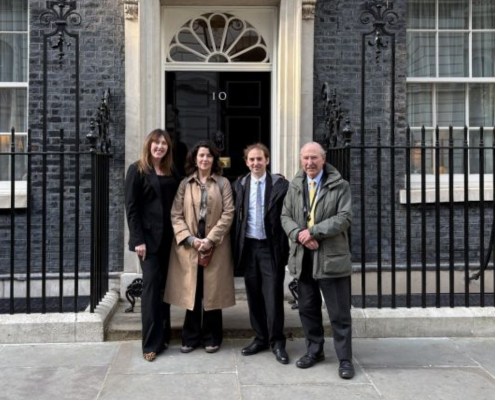
Lord Best, our Renew Advisory Group chair, the NHC’s Tracy Harrison and Patrick Murray and our Chair Charlie Norman went to Downing Street to brief No. 10 advisors about housing-led regeneration in the North. The group shared insight from our Renew inquiry about how housing-led regeneration can deliver growth, help tackle the housing crisis, and strengthen communities across the North. 

This meeting was a fantastic opportunity to engage with key people at the heart of the Government and to put forward a case about why housing-led regeneration is an essential part of northern growth and the delivery of new homes, alongside improving existing homes and places. It was also great to get insight from the No. 10 team about current policy priorities and how our work can link in. 

At the beginning of April we launched Perspectives on Regeneration, a series of think-pieces from the North’s leading voices on regeneration. The collection sets the context for the Renew inquiry looking at why regeneration is an essential part of tackling the housing crisis in the North.  

The articles share examples of best practice and partnership working, as well as covering the importance of resident voice in regeneration. Some of the articles look beyond the social housing sector into the private rented sector, and at community-led initiatives. Inside Housing has supported the series as part of their month-long focus on regeneration publishing articles from our Chief Executive Tracy Harrison and Chair of Homes England Pat Ritchie. 

We also brought together the Renew Advisory Group for their first face-to-face meeting in York to discuss initial findings from the Call for Evidence, with the interim report set to launch this summer. We received submissions from housing providers that own or manage 70 per cent of the North’s social housing.  
 
The meeting was followed by a site visit to York Central, one of the UK’s largest brownfield regeneration schemes. The group heard from Homes England’s Leon Guyett about how the site will deliver over 2,500 homes and add in excess of £1.2bn to the local economy. Work is well underway on infrastructure, and the start of the first phase is in sight. The scheme will undoubtably bring massive benefits to the city, but there have been challenges along the way. The site was first identified around 20 years ago, yet only now is it close to becoming a reality.  

Planning is underway for a series of visits with northern housing partnerships to member regeneration sites across the North. The tours will showcase sites at different stages of the regeneration journey and share lessons about what works well and barriers to successful delivery.  They will help decision makers understand the real-life impact of current and future policy priorities on communities and social housing providers in the North.  The NHC will capture learning from the visits and feed it into the Renew inquiry to develop policy and funding recommendations which support successful regeneration in the future. 

NHC update on the Spring Forecast 2026 speech

On 3 March 2026, the Office for Budget Responsibility (OBR) published new forecasts for the economy and public finances. The Chancellor responded to the forecast in her Spring Statement but as expected, there were no major policy announcements.

The Government resolved to make major tax and spending announcements once a year, at the Budget, which is expected to be held in the autumn. They made a virtue of the ‘stability’ from having only one fiscal event a year and the forecast states that taxes are not changing and neither is spending.

So, despite it being a low-key event, it is still important in showing what effect the last Budget and the Government’s policies have had.

The Chancellor referenced the current global instability, but the OBR forecasts do not take into account any potential impact from a jump in energy prices triggered by the conflict in the Middle East. The OBR states it “could have very significant impacts on the global and UK economies.”

In the Chancellor’s speech she also referenced the importance of “…building growth…in every part of Britain…” and “…creating capacity in our economy through affordable housing…”.

The Chancellor stated that the forecast shows the Government’s plan is the right one, stating “Inflation is down, borrowing is down, living standards are up and the economy is growing.”

Her speech stated that there have been six interest rate cuts since the last general election.

The OBR projects that inflation will fall from 3.4% in 2025 to 2.3% in 2026, and then again to 2% from 2027 onwards. The OBR forecast that the 2% target for the UK inflation rate will be met in ‘late 2026’. The chancellor predicted that people will be more than £1,000 a year better off by the next election, after accounting for inflation.

She cited discounts on energy costs, trade deals, investment in infrastructure and skills, funding for further education and planning reforms as contributing to building growth in the economy.

  • The housing market – OBR forecast that house price inflation will average just over 2.5% over the rest of the forecast period, broadly in line with growth in average incomes. Net additions to housing stock are expected to fall from an average of 260,000 a year in the early 2020s to a low of 220,000 in 2026-27, as recent muted housing starts feed through. It is then expected that net additions could rise sharply to just over 305,000 by 2030-31, reflecting the impact of planning reforms.
  • Planning reforms – the forecast has a positive view of the Government’s planning reforms which are expected to boost housing supply, but the reforms’ impact on net additions has yet to meaningfully materialise. Progress will be evaluated again in the Autumn.
  • Local authority finance – The latest 2024-25 estimate of local authority borrowing is £8 billion higher relative to the March 2025 forecast.
    • Net borrowing this year could be around 8% higher than 2024-25.
    • The forecast confirms that the financial positions of many Housing Revenue Accounts (HRAs) have deteriorated sharply.
    • HRA spending on repairs and maintenance increased by 56% between 2019‑20 and 2025‑26, while rental income increased by only 29% over the same period.
    • The OBR highlights that many HRAs are “effectively loss‑making” and many councils have been required to sell housing stock or borrow to remain compliant with the legal requirement not to run a long-run deficit on the HRA.
    • The forecast confirmed that rising demand for statutory services – such as temporary accommodation, asylum accommodation and social care – continues to present a significant risk to local authority finances.
    • “Together, housing services and social care for both adults and children now make up around 30 per cent of local authority service expenditure in England, compared to around 20 per cent in 2015-16.” OBR March 2026 Economic & Fiscal Outlook
  • Unlocking investment in urban areas – the Chancellor’s speech referenced the changes to the Green Book, which are expected to unlock investment in urban, rural and coastal communities as well as Pride in Place investment.
  • Energy Prices – the Chancellor repeated the pledge from last year to cut energy bills by £150 in April.
  • Welfare Spending – Welfare spending is forecast to rise this year by £18 billion (5.8%) to £333 billion or 10.9% of GDP. The Chancellor stated the Government will achieve the “biggest reduction in child poverty since records began” and cited scrapping the two-child limit.
  • Unemployment – the unemployment rate is expected to peak at 5.3% this year and then fall gradually to 4.1% by 2030. The Chancellor stated the Government is already taking action, reforming apprenticeships through its youth guarantee with more plans to be set out in the coming weeks. 

NHC Reaction

Following the Spending Review in June 2025, which delivered transformative announcements for the social housing sector – including a £39 billion investment into a ten-year Social and Affordable Homes Programme – what the sector needs now is stability and support to deliver. So, the statement which leaves current policy in place to be delivered is welcome, as is the recognition of the importance of place-making and of affordable housing for growth.

Further reading

The Government has recently made several significant housing policy announcements including launching the Decent Homes Standard and the Warm Homes Plan, confirmation of rent convergence, and an update on Minimum Energy Efficiency Standards. For detail about how these announcements impact housing in the North you can read our member briefing.

In addition, bidding opened through Homes England on 24 February for the new £39 billion Social and Affordable Homes Programme. The NHC warmly welcomes the new programme, which will enable members to plan the development of new homes with confidence and deliver the social and affordable homes that our communities desperately need. You can read our update on the bidding process here.

Bidding open for £39 billion Social and Affordable Homes Programme

Housing Minister Matthew Pennycook MP has written to the social housing sector announcing that the groundbreaking £39 billion Social and Affordable Homes Programme is now open for bids.

He says in the letter:

“Taken together with the Spending Review package, we have now provided a decade of certainty across grant funding, rents, regulatory standards and clear ambitions for the sector. We are asking providers to take the next step now via bidding for SAHP to translate this certainty into ambitious delivery plans.

“By working together, we can ensure this becomes a reality: investing in existing homes so they are safe, decent and warm, and delivering the biggest increase in social and affordable homes in a generation. I look forward to continuing to work closely with you as we deliver a decade of renewal.”

You can read the full letter here.

The NHC warmly welcomes the new programme, which will enable members to plan the development of new homes with confidence and deliver the social and affordable homes that our communities desperately need.

We have worked closely with the Government and have consistently highlighted the importance of a long-term programme which prioritises social rent and includes flexibility on regeneration. We have put forward the case for greater devolution to make sure it meets local priorities and enables housing providers to collaborate on delivery through housing partnerships.

The Government has listened and the new programme – 70 per cent of which will delivered outside of London – picks up on the needs of the North. Some major changes include more funding for social rent – 60 per cent of the total fund – and greater support for regeneration. The grounds by which ‘additionality’ can be demonstrated have been  significantly expanded, and the new SAHP can fund a limited number of property acquisitions for regeneration purposes.

The new programme will be aligned to local priorities to a much greater extent. Each Established Mayoral Strategic Authority (EMSAs) will be able to set the strategic direction of the SAHP in their areas and establish programme priorities, including the types of property, tenure and individual sites that should be prioritised. In the North this will apply to Greater Manchester, Liverpool City Region, North East, South Yorkshire and West Yorkshire combined authorities.

Our briefing on the Social and Affordable Homes Programme prospectus can be viewed here. The prospectus provides further detail around how the fund will be delivered now that bidding is open.