
Tracy Harrison reflects on 20 years (and counting) of impact at the Northern Housing Consortium
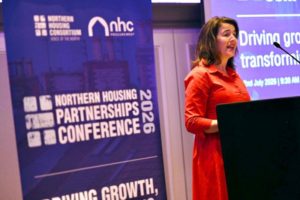
After two decades with the Northern Housing Consortium, Chief Executive Tracy Harrison reflects on what 20 years at the organisation has taught her, and her plans to take the NHC even further.
Looking back over her time with the NHC, Tracy points first to the financial stability the organisation has achieved. A deliberate strategy to grow and diversify NHC Procurement has helped reduce reliance on other sources of income, protect the organisation’s surplus, and create new opportunities to support members.
She is equally proud of the influence the NHC now has nationally. “Undoubtedly we are the voice of the North in housing,” Tracy says. “Increasingly, we have a seat at the table where we are the only regional housing voice.”
A transformed sector
Tracy joined the NHC in 2006, when the housing sector was part-way through the original Decent Homes programme. Providers were investing heavily in improving existing stock, while government attention was also focusing on the need for more homes.
Nearly 20 years later, she sees clear parallels as the sector looks ahead to implementing a new Decent Homes Standard and renewed investment in existing homes. But the wider context has changed significantly following the global financial crash, austerity measures and the pandemic, while political change and fragmentation have created additional complexity for housing providers and for organisations seeking to influence policy.
At the same time, tenant voice and customer focus have moved much closer to the centre of the sector’s thinking. For Tracy, whose early career was in fast-moving consumer goods, that focus on the customer has always been fundamental.
Leadership shaped by people, purpose and enterprise
Tracy describes her leadership approach as being shaped less by one defining moment and more by the environments she has worked in throughout her life. Growing up in a business family gave her a strong work ethic, a focus on adding value, and an entrepreneurial outlook.
Early in her career, she also saw what a great team can achieve when people work hard, support each other and enjoy what they do. That belief in people has remained central to her leadership at the NHC.
Making a difference in the North
Although Tracy says she “completely fell into housing”, it is the people, purpose and impact of the sector that have kept her here.
“What motivates me to stay in housing and at the NHC is working with really good people, having a fantastic working environment and a shared purpose – making a difference to people’s lives every day,” she says.
Initiatives with lasting impact
Among the initiatives Tracy believes will have a lasting impact is the Unlocking Success Bursary. Launched in 2019, the Bursary, funded through the Northern Housing Consortium Charitable Trust, awards grants to tenants amongst NHC’s membership to support future employment.
“The difference our Unlocking Success Bursary makes to people’s lives is clear every year at the celebration and fundraising event, and we can’t wait to see how that makes a greater and greater impact in the years to come,” says Tracy.
Another major turning point came when Tracy became Chief Executive. Following the NHC’s first Member Perceptions Survey, the organisation made a conscious decision to become more targeted in our work.
“That sharper focus has helped us to cement our influence where it can add most value for our members and gain traction with local and national government. 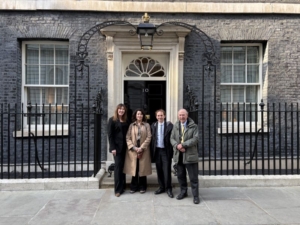
“More recently, the Renew inquiry into housing-led regeneration has built on years of work making the case that housing in the North faces unique challenges and requires solutions shaped by northern places. Renew has received evidence from organisations responsible for around one million of the North’s 1.4 million social homes and has set out how regeneration can unlock at least 500,000 good quality homes across the North.”
Growing the NHC’s influence
Tracy also highlights the long-term impact of investing in NHC Procurement. “An ‘invest to grow’ approach has enabled us to expand the team, strengthen processes and transform our procurement offer. Today, procurement is the major source of the NHC’s income and supports the wider policy, engagement and member offer.”
She points too to the NHC’s Spending Review submission, which brought together a strong evidence base from work across the previous years. Tracy believes the submission played a major part in securing long-term investment for social and affordable homes, including the £39bn Affordable Homes Programme announced by Government.
“The size and longevity of that funding programme is probably beyond what any of us imagined we would achieve,” she says.
“Housing Partnerships have also become an increasingly important part of the NHC’s work, particularly as devolution gathers pace. Partnerships are proving themselves to be highly effective delivery bodies and will continue to be central to our work with members across the North.”
Creating the conditions for people to thrive
Asked what she hopes colleagues and partners would say has been her biggest contribution, Tracy returns to culture.
“For us as an organisation, creating an environment where people can flourish and achieve their full potential – everything stems from that,” she says.
Her approach has been to surround herself with talented people, give them space and opportunity, and create an organisation where people want to stay, contribute and do meaningful work. She says it is because of the NHC’s people that the organisation “punches well above its weight”.
“That same commitment extends beyond us as an organisation,” she says through initiatives such as the Unlocking Success Bursary and the GEM programme, both of which support people to progress and develop careers in housing.
Looking ahead
For Tracy, the most enduring legacy of her time at the NHC so far will be the culture, financial sustainability, resilience, and of course the organisation’s growing influence on behalf of the North.
“Financial resilience gives any organisation the option to do more, while culture is what enables talented people to deliver their best work,” she says. “Both have been essential to the NHC’s ability to build credibility, influence Government and support members.”
As devolution continues to move up the national agenda, Tracy says the NHC’s focus now is on making the most of the moment. The organisation has helped create and support the architecture for delivery, including through Housing Partnerships, and will continue to champion the role of housing in northern growth.
“My ambition hasn’t diminished at all,” Tracy says. “My drive for the organisation is still there, and the sky is the limit for us at the NHC. It’s so clear that we are making a real difference, and it still feels like there’s so much more we can do.”
She also wants to keep building the NHC’s culture as work patterns continue to change – positioning the organisation both as a place where people can build long-term careers and as a talent incubator for the wider sector.
Tracy also pays tribute to the NHC Board, describing them as extremely supportive and committed, and central to what the organisation can achieve.
“The more we do great work, the more great people want to work with us – whether as colleagues, partners or members,” she says.
 In the week where Andy Burnham MP made his first major leadership speech at the People’s History Museum in Manchester, housing partnerships from across the North came together for the NHC’s first

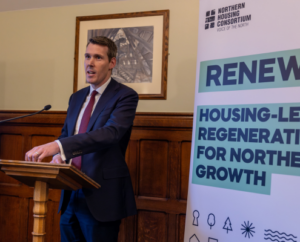 The new Prime Minister Andy Burnham MP has made several key cabinet appointments which will have a significant influence on social housing in the North. These include:
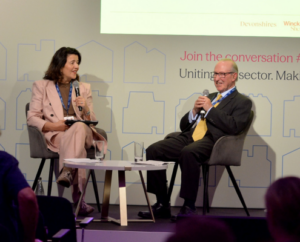 The far-reaching role of housing-led regeneration, and the Renew inquiry, and partnership working have been big talking points at the Great Northern Theatre 26.
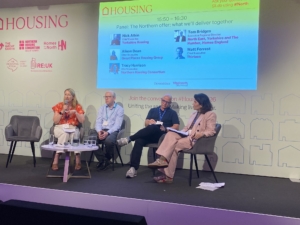 This was followed by a panel session on effective partnerships chaired by NHC Deputy Chief Executive James Ealey. Marc Edwards, Executive Director of Property at Gentoo, spoke about the North East Housing Partnership’s collaborative planned investment partnership which is helping North East housing providers save millions on the installation of new kitchens and create local employment opportunities. Shazia Bashir, Partner, Winckworth Sherwood, shared insights on partnerships from a legal perspective. Robin Tuddenham, Chief Executive, Calderdale Council, spoke about the need for local authorities to step forward and take a leading role in partnerships, and to get the balance right between structure and collaboration. Sasha Deepwell, Chief Executive, Irwell Valley Homes shared her experience of being part of Greater Manchester Housing Providers, the longest established housing partnership, and the huge impact it is having.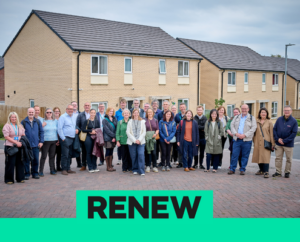
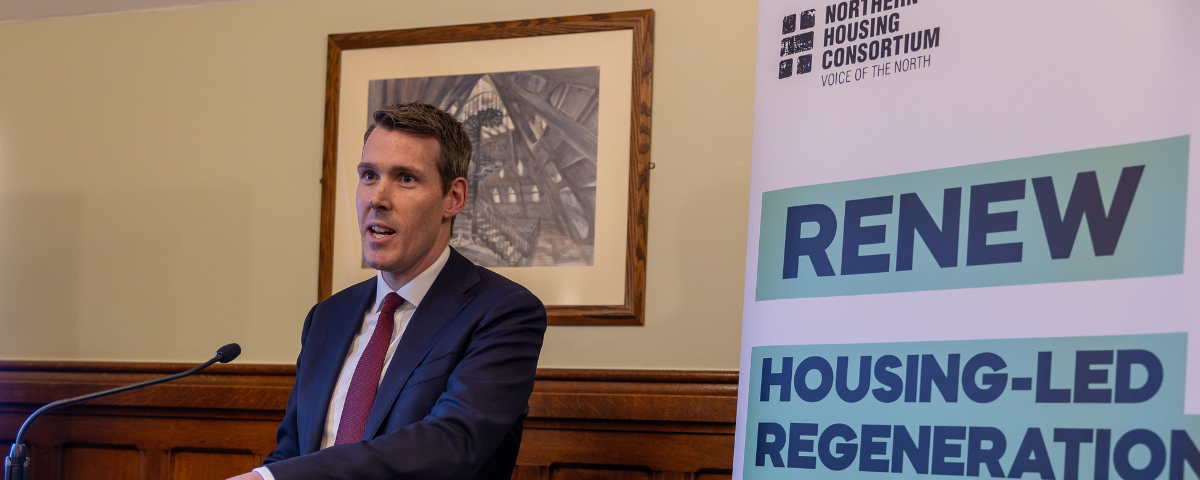

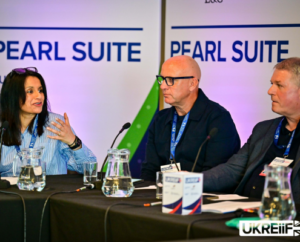
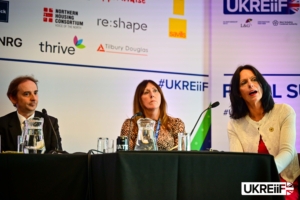 NHC Executive Director (Policy and External Relations) Patrick Murray was on the panel for L&Q’s ‘10 Years of Good Growth in Greater Manchester’ session. Patrick highlighted how devolution and partnerships are critical to growth in the North. He gave an update on Renew, our inquiry which explored how