Help Us Unlock Success for More Tenants in 2027 

34 tenants from across the North of England have been chosen to receive an Unlocking Success Bursary this year, and we are lucky enough to share their stories on the Unlocking Success Bursary website. 

Each winner will receive £500 to help them develop new skills and opportunities, whether that is through training, qualifications, equipment, or support that helps remove practical barriers to help overcome practical challenges that might otherwise prevent them accessing learning opportunities. 

The Bursary relies on fundraising through our annual Unlocking Success Bursary Lunch, taking place on the 4th December at Ramside Hall in Durham. By booking a table, you will help us raise the funds needed to offer the Bursary to even more tenants in 2027 and demonstrate the housing sector’s collective commitment to supporting tenants to fulfil their potential. 

It is also a chance to spend time with colleagues from across the sector, reflect on the challenges and achievements of the past year, and hear first-hand how the Bursary is helping tenants across the North. 

We would be delighted if you could join us, bring colleagues or guests, and help ensure we can support another cohort of bursary recipients next year. To book a table or find out more, please email Lynda.redshaw@northern-consortium.org.uk.  

Thank you for your continued support for the Unlocking Success Bursary and for the difference our members make every day in communities across the North. 


When residents ask AI, your website holds the answer

NHC Advisory Partner, Mediaworks guest blog. Written by Lewis Walmsley CIHCM is Growth Manager – Housing at Mediaworks

It’s 9pm on a Sunday and a resident spots black mould behind the wardrobe in her son’s bedroom. She might consider ringing the out of hours team or logging this through a portal, or she could open ChatGPT and type ‘”How do I report damp to my housing provider’

The answer she gets, including the phone number, timescales and what happens next, is pieced together from whatever AI can find about you online. If your website is out of date, the answer will be too. And, as these tools do, it will be delivered with complete confidence.

Residents are already asking AI first

This isn’t a future trend. Ofcom’s 2026 Adults’ Media Use and Attitudes research found 54% of UK adults now use AI tools such as ChatGPT, Copilot or Gemini, rising to 79% of 16 to 24 year olds. Three in four online adults read the AI-generated summaries that now sit at the top of Google results, including many who never open a chatbot.

That changes the job your website does. It used to be a page residents visited. Nowadays, it’s a source that AI reads on their behalf and summarises, often without the resident ever clicking through.

Why housing can’t afford to get this wrong

Most sectors worry about AI getting pricing or opening hours wrong. In housing, the stakes are higher. The questions residents ask are often about safety, money or their home itself:

  • How do I report damp and mould, and how quickly will someone come out?
  • What counts as an emergency repair out of hours?
  • How do I make a complaint, and what happens if I’m not happy with the response?
  • What help is there if I’m struggling to pay my rent?

With Awaab’s Law now setting clear timescales for hazards, a chatbot quoting an old repairs policy or a retired phone number isn’t a minor inconvenience. It can delay a report, set the wrong expectation and, ultimately, become a complaint, or worse.

The uncomfortable truth is that, in our experience, most housing websites carry years of content layers. PDFs from previous policy reviews, news stories about services that have since changed, contact details from before a restructure or merger. A person browsing might spot that something looks outdated. An AI model generally won’t. It weighs what it finds and presents the result as fact.

Five things members can do now

The good news is the steps that help AI give accurate answers are the same ones that make a website better for residents.

  1. Ask the AI yourself. Put your ten most common resident questions into ChatGPT, Gemini and Copilot, naming your organisation. Note where the answers are wrong, vague or pointing at old pages.
  2. Audit and prune. Find out-of-date policies, PDFs, contact numbers and news pages, and update, redirect or remove them. Old content doesn’t just sit quietly; it gets read and repeated.
  3. Give every key page an owner. Repairs, damp and mould, complaints, rent and money advice should each have a named owner and a review date, so policy changes reach the website the same week.
  4. Answer the question clearly. Plain English, specific timescales, one current phone number. Clear headings and short FAQ-style answers are easier for both residents and AI to understand.
  5. Keep your details consistent everywhere. Google profiles, directories, social media and partner sites all feed AI answers. If they disagree with your website, AI has to guess.

None of this necessarily needs a new website. It needs someone to treat accuracy as a service standard, not a web task.

Your website is now speaking for you

Residents will keep asking AI first, because it’s quick, it’s there at 9pm on a Sunday, and it doesn’t put them on hold. We can’t control what these tools say. But we can control the source material they rely on.

Get your website right, and the AI gets it right too. Leave it, and somebody else’s summary of your old policy becomes your service.

If you’d like to see how your organisation shows up in AI answers, we’re happy to run a complimentary light-touch audit and share what we find.

Lewis Walmsley CIHCM is Growth Manager – Housing at Mediaworks. For more information, contact lewis.walmsley@mediaworks.co.uk
NHC submits response to consultation on mayoral planning powers 

Mayors will receive important new planning powers from “early 2027” 

The NHC submitted a response to the Government’s consultation on new planning powers for Mayoral Strategic Authorities.  

The consultation proposes a range of new powers for mayors, including the ability to intervene in strategically important planning applications, introduce Mayoral Development Orders and establish a Mayoral Community Infrastructure Levy (MCIL). In its response, the NHC supports the broad direction of the proposals while highlighting a number of issues that will need to be addressed if the powers are to deliver their intended benefits. 

A key theme of the response is the need for flexibility. Housing and land markets vary significantly across the North, meaning that a single national set of thresholds may not always identify developments that are genuinely strategic within local areas. We therefore made the case that mayors should have the ability to tailor thresholds to reflect local circumstances.  

Our response also makes the case for regeneration to be recognised as a distinct category of strategic importance. Across many northern communities, the most significant development opportunities are not large greenfield sites but estate renewal, town centre regeneration and the remediation and redevelopment of brownfield land. Mayors should have clearer powers to support these schemes and unlock delivery. 

Our response further highlights the importance of recognising the different governance arrangements that exist outside London. In mayoral authorities outside of the capital, mayors work alongside constituent council leaders through combined authority structures, and constructive relationships between those partners are essential to delivering housing, regeneration, transport and skills ambitions. New powers should support these relationships and be implemented in a way that protects collaborative working across mayoral areas. 

Alongside this, there are concerns about capacity and resourcing. Feedback from strategic authorities suggests that many areas will require additional specialist planning, development and viability expertise if they are to make effective use of the new powers. We therefore called for additional capacity funding to support implementation at the Autumn Budget in 28th October.  

The response also highlights the potential impact on local planning authority finances, particularly where Mayoral Development Orders could remove planning functions and associated fee income from councils. The government has not yet clarified how it intends to address this issue.  

On infrastructure funding, the we support giving mayors greater flexibility over how any future MCIL is designed and used. It is critical that any levy reflects local market conditions and does not undermine development viability in areas where viability is already challenging. Furthermore, we also called on Government to consider allowing MCIL receipts to support affordable housing delivery, which they currently cannot. 

The Consortium will continue working with members and Government as the proposals are developed further. 

Our full response can be found here.  


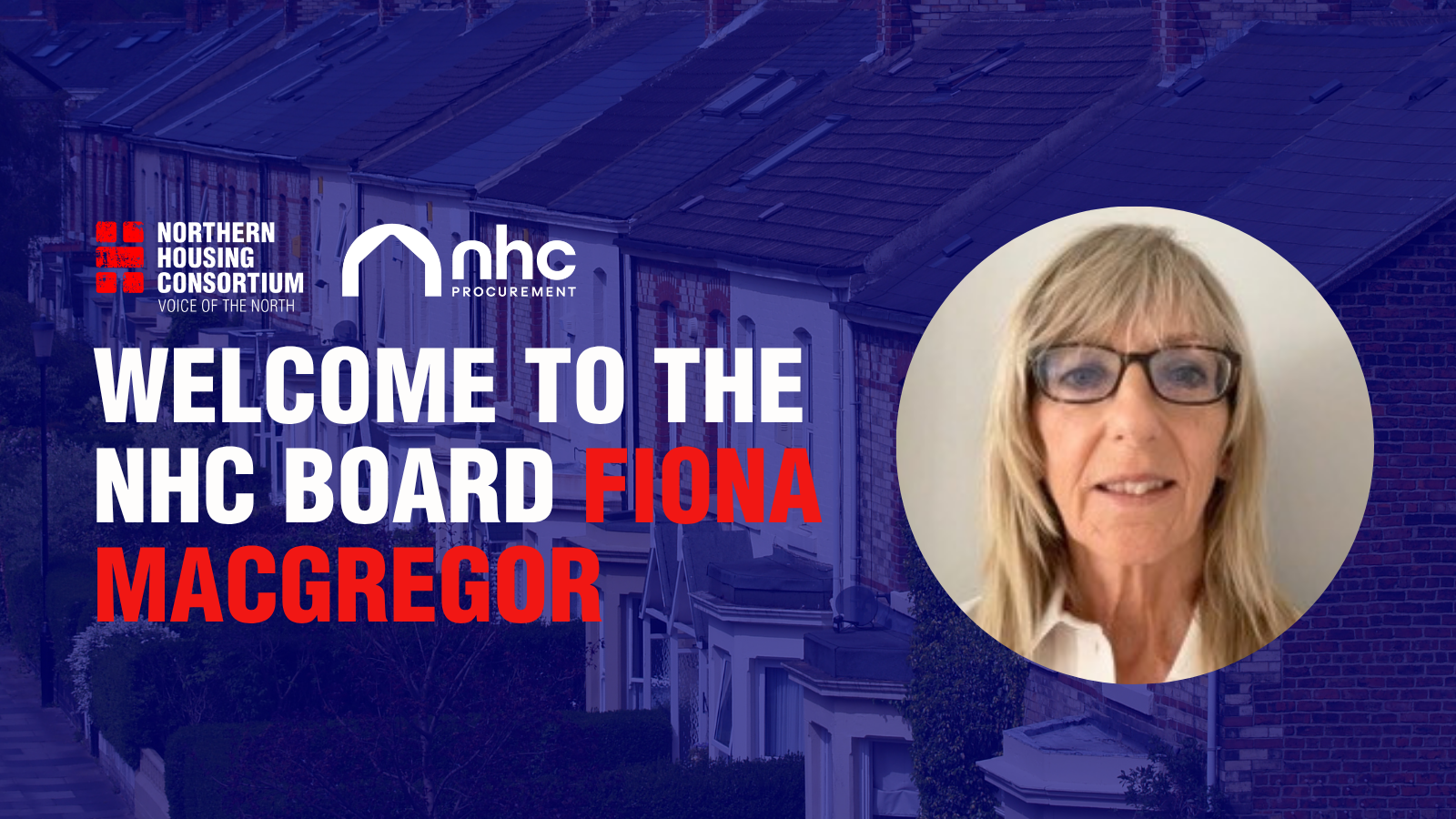
Northern Housing Consortium appoints former housing regulator Fiona MacGregor to Board 

The NHC has appointed former Chief Executive of the Regulator of Social Housing (RSH), Fiona MacGregor CBE, as a co-opted board member.

Fiona MacGregor brings almost 40 years’ experience across social and affordable housing, including senior leadership roles in policy development, affordable housing investment and programme delivery, regulatory strategy, governance and sector oversight.

She served as Chief Executive of the RSH from 2018 until 2026, having previously held the position of Executive Director. During her time at the regulator, she oversaw its transition to a standalone organisation, led the introduction of new consumer standards following the Grenfell Tower fire, and helped establish a proactive consumer regulation and inspection regime designed to improve outcomes for tenants.

Prior to joining the regulator, Ms MacGregor held a number of national housing roles, working closely with government departments, ministers and housing sector leaders.

NHC chief executive Tracy Harrison said:

“We’re delighted to welcome Fiona to the NHC Board. She has made an enormous contribution to social housing throughout her career and is one of the most respected figures in our sector. Her experience spans regulation, governance, development and regeneration, giving her a unique perspective on both the opportunities and challenges facing communities across the country.

“With housing, devolution and regeneration firmly at the top of the Government’s agenda, Fiona’s insight, challenge and strategic advice will be invaluable as we continue to champion the North and support our members to deliver real change for tenants and communities.”

Fiona MacGregor said:

“The NHC plays an important role in bringing together northern housing providers to share learning, influence policy and create better homes and places.

“Throughout my career I have worked closely with organisations across different parts of the country and developed a strong appreciation of the distinct priorities, challenges and opportunities facing different places. I look forward to working with the NHC, acting as an ambassador for its members and helping ensure northern voices and priorities continue to be heard in national housing policy discussions.”

Ms MacGregor was awarded an OBE in 2011 and a CBE in 2026 in recognition of her services to social housing. She has also recently been appointed to the Board of Sanctuary Group.